At a glance
Redpanda Console and Kafdrop are scored here on the same five criteria, 50 points in all: Redpanda Console 29 out of 50, Kafdrop 23 out of 50. Redpanda Console takes its best score on Deployment footprint (8 out of 10) and its lowest on Multi-cluster reach (2 out of 10). Cost a year: $0 licence, $8,640 in operator time (this page's estimate). Kafdrop takes its best score on Cost as teams grow (10 out of 10) and its lowest on Access control and audit (0 out of 10). Cost a year: $0 licence, $11,520 in operator time (this page's estimate).
Kafdrop vs Redpanda Console, compared
Kpow meets 5 of 7 requirements on this page. One row is not a yes or no question.
Key takeaway
Kafdrop is Apache 2.0 with no paid tier, and Redpanda Console’s community edition sits under the Business Source License, source-available rather than open source. Kafdrop ships no authentication of its own, and the feature request was closed as not planned in February 2026. Console’s SSO and interface RBAC require a Redpanda Enterprise licence, bought from the broker vendor whether or not you run its broker. Neither reaches more than one cluster from a single deployment. Kpow by Factor House is licensed per cluster at a published price.
Kpow live demo
Test the trade-offs in a live Kafka UI
You have compared Kafdrop vs Redpanda Console. Open a live Kpow environment to test the everyday workflows a shared Kafka platform needs.
Built for platform and data teams managing shared Kafka clusters.
Try the Kpow demoWhat is Kafdrop?
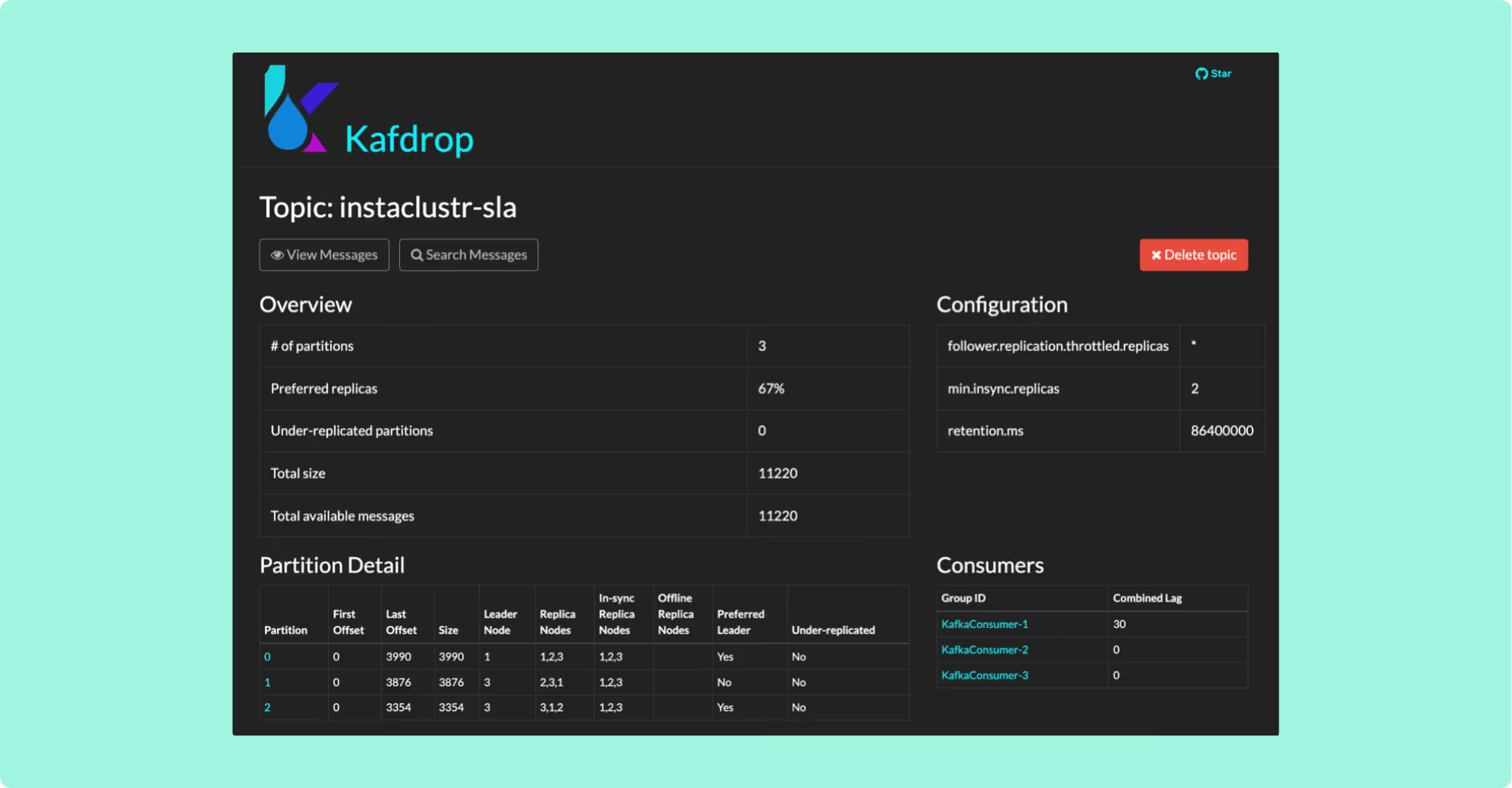
Kafdrop is an open-source Kafka web UI built on Spring Boot, licensed Apache 2.0 and hosted at obsidiandynamics/kafdrop, where the Obsidian Dynamics team co-maintains it. It runs as one stateless Java process against the broker’s admin API, with no backend datastore and no ZooKeeper connection required since version 3.10.0. Requirements are Java 17 or newer and Kafka 0.11.0 or newer, or Azure Event Hubs.
- view brokers and topics
- browse messages in JSON, plain text, Avro and Protobuf
- view consumer groups with combined and per-partition lag
- create topics, and view ACLs
The brevity is the point, and it is why the project became the tutorial default. The scope statement that decides most evaluations is KRaft. Apache Kafka 4.0 supports KRaft only and ZooKeeper has been removed from the broker outright. Kafdrop’s position is settled rather than pending: three KRaft failure reports were closed as not planned, the last on 10 April 2025, and none has been opened since. Needing no ZooKeeper connection is a different claim from running against a Kafka 4.x cluster, and only the first is on the record.
What is Redpanda Console?
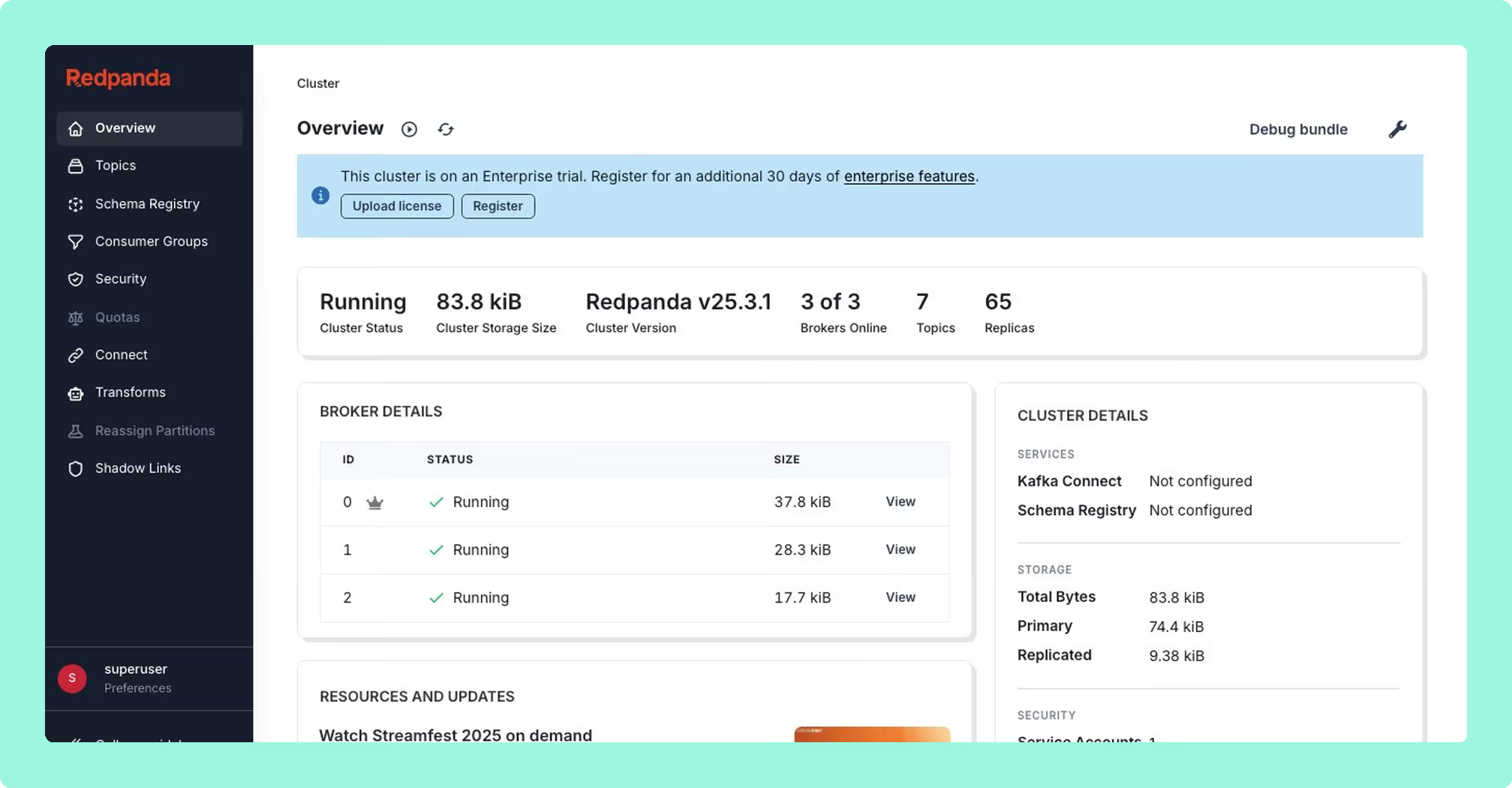
Redpanda Console is a web interface for Kafka-compatible clusters, written in Go and React and shipped as a Docker image and a Helm chart. It started as Kowl, built by CloudHut, and Redpanda acquired it in April 2022. It serves Redpanda clusters, where it also talks to the Redpanda admin API, and it serves vanilla Apache Kafka, Amazon MSK and Confluent Platform outside any Redpanda environment.
- Message viewer: JavaScript filtering, time-travel offsets, and automatic encoding recognition across JSON, Avro, XML, MessagePack and binary.
- Observer Mode: browses a topic without joining a consumer group.
- Users and ACLs: SASL-SCRAM user and ACL management in the free tier.
- Connect: management spanning multiple Kafka Connect clusters from one instance.
The community edition is under the Business Source License, which is source-available rather than open source. Under that licence, production use is permitted only by an Additional Use Grant the licensor writes, and rights under the change licence take effect on a change date or on the fourth anniversary of a version’s first public distribution, whichever comes first. The gate is narrow: identity-provider SSO and role-based access control for the interface require a Redpanda Enterprise licence, whose price is not published.
What is the official 2026 pricing of Kafdrop and Redpanda Console?
Kafdrop costs nothing to license, no commercial edition exists to buy, and the whole price is therefore operator time. There is no SLA to escalate to, because there is nobody to escalate to.
Console is free until it is not, and the meter is governance rather than seats. There is no user cap and no seat count anywhere in it, so the entire debugging surface is free at any team size, and the line falls at who is allowed to see what. Lifting it means an enterprise licence from the broker vendor, so a team on Amazon MSK or vanilla Apache Kafka buys a platform licence from a company whose broker it does not run. Console shipped v3.11.0 on 25 August 2026, with three more releases in the two months before it and a 2.8.x maintenance line still being cut alongside. Kafdrop’s newest tag is 4.2.0 from 31 July 2025, and its tags run roughly annually, while commits land continuously and reach no published image.
Where does each one run out?
Both tools are marked out of 10 on the same five criteria, for a total out of 50, and every criterion counts once. Nothing sits behind a multiplier, so a total is the sum of its five marks and a reader can recompute it. The five are cost as teams grow, deployment footprint, support and maintenance, access control and audit, and multi-cluster reach, because those are the questions a Kafka interface is actually measured against after the first month: a second cluster, an access review with a date on it, an upgrade nobody owns, and a bill that moves when the team does. The widest gap between the two marks is on access control and audit, where Kafdrop marks 0 and Redpanda Console marks 6. The marks come from the same matrix used on every comparison on this site, so a tool scores the same here as it does anywhere else, and the reason behind each mark is in the card below, under Why these scores.
The dependency figures in the cards below were read on 24 September 2026 from each project’s published release artefact and matched against the NVD and GitHub advisory databases, so they move whenever a release or an advisory lands. Self-hosting is not the risk on this page. Both run in your own infrastructure. The question is who rebuilds the image when a dependency advisory lands.
 Rank 1
 Redpanda Console
redpanda.com
29 out of 50 Total
- Cost a year
- $0 licence, $8,640 in operator time (this page's estimate)
- Licence
- Business Source License, source-available
- SSO and interface RBAC
- Redpanda Enterprise. Price not published
- Cost as teams grow
- 6 out of 10
- Deployment footprint
- 8 out of 10
- Support and maintenance
- 7 out of 10
- Access control and audit
- 6 out of 10
- Multi-cluster reach
- 2 out of 10
Why these scores for Redpanda Console
- Cost as teams grow 6 out of 10
- Free under the Business Source License with no seat count, docked because governance needs a Redpanda Enterprise licence that is not published. On this page, the entire debugging surface is free at any team size, and the line falls at who is allowed to see what.
- Deployment footprint 8 out of 10
- A container or a Helm chart holding no state, plus an external Schema Registry. This page adds that Console bundles no schema registry, so schema browsing needs one standing beside it.
- Support and maintenance 7 out of 10
- It shipped v3.11.0 on 25 August 2026 after two more releases since July, with Redpanda under contract where licensed. The page’s own prose counts three more releases in the two months before it and a 2.8.x maintenance line still being cut alongside.
- Access control and audit 6 out of 10
- RBAC, OIDC single sign-on and masking are licence-gated and absent from the free tier. On this page, SASL-SCRAM users and Kafka ACLs are managed free, and what is licensed is role-based access to the interface in front of them.
- Multi-cluster reach 2 out of 10
- One broker cluster per deployment at any price. This page records that the request was filed twice and the April 2022 one is still open, so three environments is three deployments. It does span several Kafka Connect clusters from one instance.
Console runs out in a different direction. There is no broker-tier multi-cluster at any price: the request was filed twice, and the April 2022 one is still open, so three environments is again three deployments.
Monitoring: no built-in broker metrics, no alerting and no historical trends, so Kafka monitoring is a separate Prometheus and Grafana stack.
Write path: nothing in the interface produces a message, and Console bundles no schema registry.
Timeouts: 6 seconds for DescribeLogDirs and Metadata and 5 for DescribeConfigs, hardcoded, plus a separate 35-second ListMessages limit.
Degradation: one broker offline in a multi-node cluster fails every consumer group query with a shard error.
The free tier does manage SASL-SCRAM users and Kafka ACLs, so RBAC for Kafka itself is reachable without a licence. What is licensed is role-based access to the interface in front of it. Protobuf sits across the split too: Console answers it with local descriptor maps declaring which schema applies to which topic, and Kafdrop with a per-topic setting somebody types in.
What it costs a year: nothing to licence for the debugging surface at any team size, and nothing published for the governance above it. This page’s estimate rather than a vendor price, at 120 US dollars an engineer hour: six hours a month to run a maintained open-source build and the external Schema Registry it does not bundle is 8,640 US dollars a year. Single sign-on and interface role-based access then sit on top, behind a licence bought from a broker vendor whose broker you may not run. Kpow on one cluster is its published 4,500 plus 2,880 of the same modelled operator time, so 7,380 a year, with access control included and no second vendor in it.
Compare Kpow vs Redpanda ConsoleAKHQ vs Redpanda ConsoleRedpanda Console review
23 out of 50 Total
- Cost a year
- $0 licence, $11,520 in operator time (this page's estimate)
- Licence
- Apache 2.0, one tier, nothing purchasable
- Clusters per deployment
- One
- Cost as teams grow
- 10 out of 10
- Deployment footprint
- 10 out of 10
- Support and maintenance
- 2 out of 10
- Access control and audit
- 0 out of 10
- Multi-cluster reach
- 1 out of 10
Why these scores for Kafdrop
- Cost as teams grow 10 out of 10
- Apache 2.0, the whole product, no seat or cluster cap. On this page, nothing is held back, no commercial edition exists to buy, and the whole price is therefore operator time.
- Deployment footprint 10 out of 10
- One stateless Java process with no database and no sidecar. This page records that no ZooKeeper connection has been needed since 3.10.0, against a container plus an external Schema Registry on the other side.
- Support and maintenance 2 out of 10
- Newest tag 4.2.0 of 31 July 2025, KRaft reports closed as not planned, GitHub issues only. This page adds that its tags run roughly annually while commits land continuously and reach no published image, against v3.11.0 on 25 August 2026 beside it.
- Access control and audit 0 out of 10
- No authentication in the product, an NGINX basic-auth workaround, and no read-only mode. On this page, the request was closed as not planned in February 2026, so this is scope rather than backlog.
- Multi-cluster reach 1 out of 10
- One cluster per deployment with no multi-cluster support. This page makes three environments three deployments, which is true of the tool beside it as well.
Kafdrop’s README states plainly that the project does not natively implement an authentication mechanism, and it documents an NGINX basic-auth workaround in place of a login. The feature request was opened in January 2026 and closed as not planned in February, so this is scope rather than backlog, and the question moves out into the Kafka security architecture around the container.
Read-only mode: absent. The pull request has been open since November 2020 and now conflicts with master.
Reach: no multi-cluster support, so Kafka cluster management across three environments is three deployments.
MSK IAM: never merged. Three pull requests are open and all conflict with master.
Scale: roughly 1,010 topics and 2,000 partitions took over 30 minutes to load, with 5,566 consumer groups the dominant cost.
Staying patched: 4.3.0 shipped on 31 August 2026 bundling Tomcat 11.0.22, which had carried three critical advisories since 25 August, six days earlier. One of them, CVE-2026-65905, scores 9.8 and is an authentication bypass, and all three are still in the current release. Three releases have shipped in two years. Only 66 of its 118 bundled jars resolve to a Maven coordinate, so those counts are floors rather than totals.
What it costs a year: nothing to licence, and nothing to buy even if you wanted to. This page’s estimate rather than a vendor price, at 120 US dollars an engineer hour: eight hours a month to run it and to carry the NGINX basic-auth proxy this product does not ship is 11,520 US dollars a year, before anything is spent on the KRaft migration it has closed as not planned. Kpow on one cluster is its published 4,500 plus 2,880 of the same modelled operator time, so 7,380 a year, and it runs on KRaft.
Which should you pick?
Redpanda Console scores 29 against Kafdrop’s 23 and is the pick where a message viewer has to do real debugging work, though its SSO and RBAC require a Redpanda Enterprise licence bought from the broker vendor. Kafdrop ships no authentication at all. Neither reaches more than one cluster per deployment, so a team running dev, staging and production should shortlist Kpow by Factor House, which reaches up to 12.
Pick Kafdrop if:
- the estate is one cluster
- the people using it already hold cluster credentials
- the job is a fast look at what is flowing through a topic
Pick Redpanda Console if:
- the tool is going to be opened to people who are not on call
- the daily work is reading messages rather than administering brokers
- the encodings in play include Protobuf or CBOR
- Kafka Connect is part of the estate
Observer Mode matters more than the name suggests: inspecting a topic joins no consumer group, triggers no rebalance and moves nobody’s committed offsets, which is the difference between an interface you can hand to a support engineer and one you cannot. On the other side, Kafdrop’s KRaft position bounds which clusters it is a candidate for, and its release cadence bounds how quickly that changes.
Because both stop at one cluster per deployment, Kafka multi-cluster tools is the list worth reading before committing to three separate installs, and the best free Kafka UI tools sets out what the rest of the free field holds back.
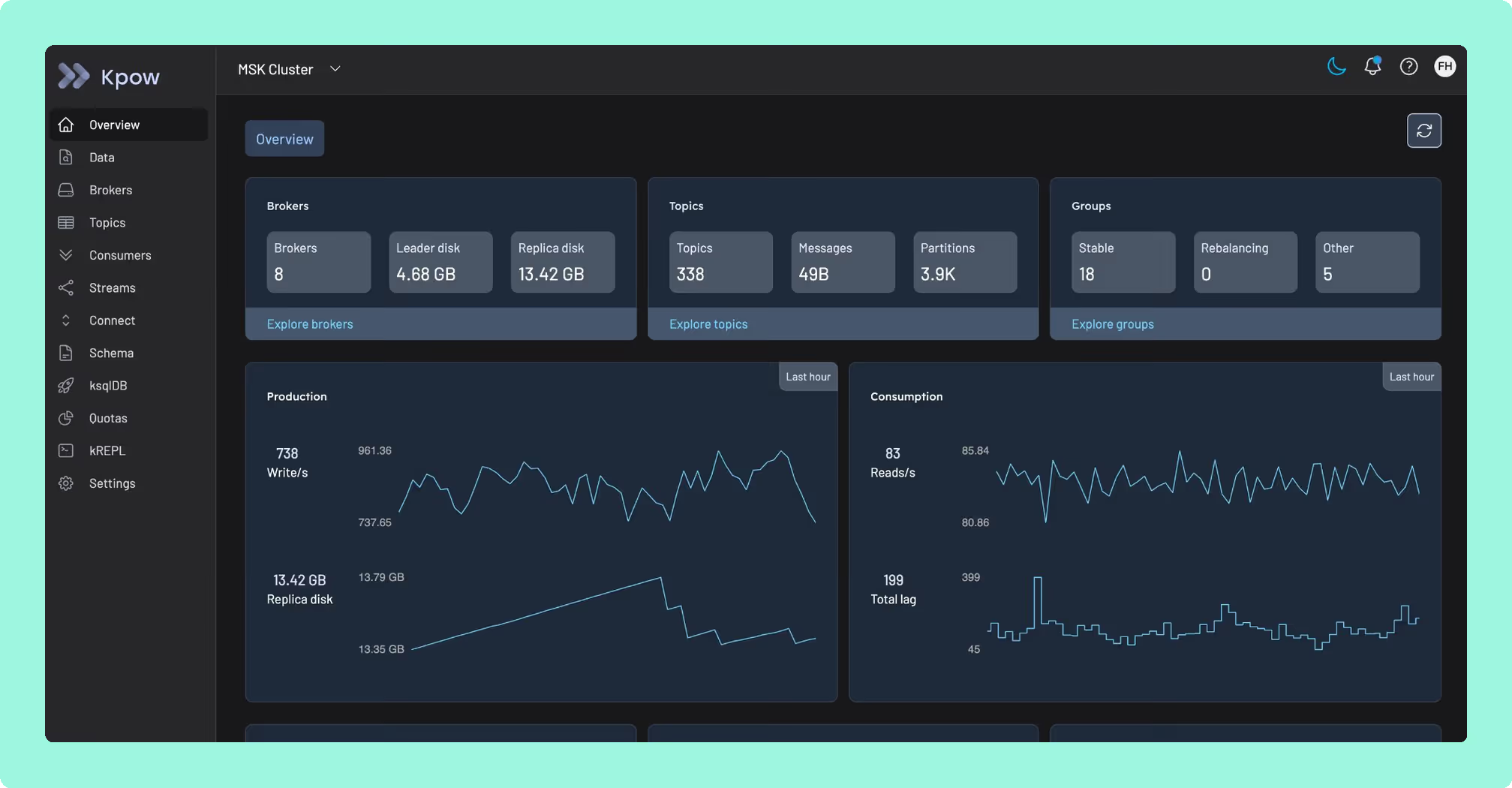
Kpow: up to 12 clusters from one instance
Kafdrop and Redpanda Console both stop at one cluster per deployment, and both leave governance somewhere other than inside that deployment. Kafdrop has no multi-cluster view and has decided authentication is outside its scope, closing the feature request as not planned. Console’s broker-tier multi-cluster request has been open since April 2022, and its SSO and interface RBAC are licensed from Redpanda’s Enterprise tier whether or not you run a Redpanda broker. Kpow by Factor House reaches up to 12 clusters from one instance, licensed per cluster at a published price, running as a single stateless container with no external database.
One cluster per deployment still means three environments are three separate installs either way. Start on Kpow and weigh its published price against what either of these would actually cost you here.
How these tools were scored
Every option is scored from 0 to 10 on each criterion, from the evidence and sources this page cites, and the reason for each score is on its card. Each criterion counts once, for a total out of 50. The options are listed by total.