At a glance
Kadeck and Kafdrop are scored here on the same five criteria, 50 points in all: Kadeck 29 out of 50, Kafdrop 23 out of 50. Kadeck takes its best score on Multi-cluster reach (9 out of 10) and its lowest on Cost as teams grow (4 out of 10). Licence: Per user per month, subscription. Kafdrop takes its best score on Cost as teams grow (10 out of 10) and its lowest on Access control and audit (0 out of 10). Licence: Apache 2.0, one tier, no paid tier.
Kadeck vs Kafdrop, compared
Kpow meets 6 of 7 requirements on this page. One row is not a yes or no question.
Key takeaway
Kadeck and Kafdrop both put a web interface over a Kafka cluster somebody else runs, so the choice comes down to buying software or buying somebody to call. Kafdrop is free under Apache 2.0, with no vendor to escalate to, no authentication, and its KRaft position already settled: three failure reports closed as not planned. Kadeck is licensed per user, and RBAC, masking and audit logs sit on Enterprise at 32 US dollars per user per month with a ten-user minimum. Kpow by Factor House is licensed per cluster at a published price.
Kpow live demo
Test the trade-offs in a live Kafka UI
You have compared Kadeck vs Kafdrop. Open a live Kpow environment to test the everyday workflows a shared Kafka platform needs.
Built for platform and data teams managing shared Kafka clusters.
Try the Kpow demoWhat is Kafdrop?
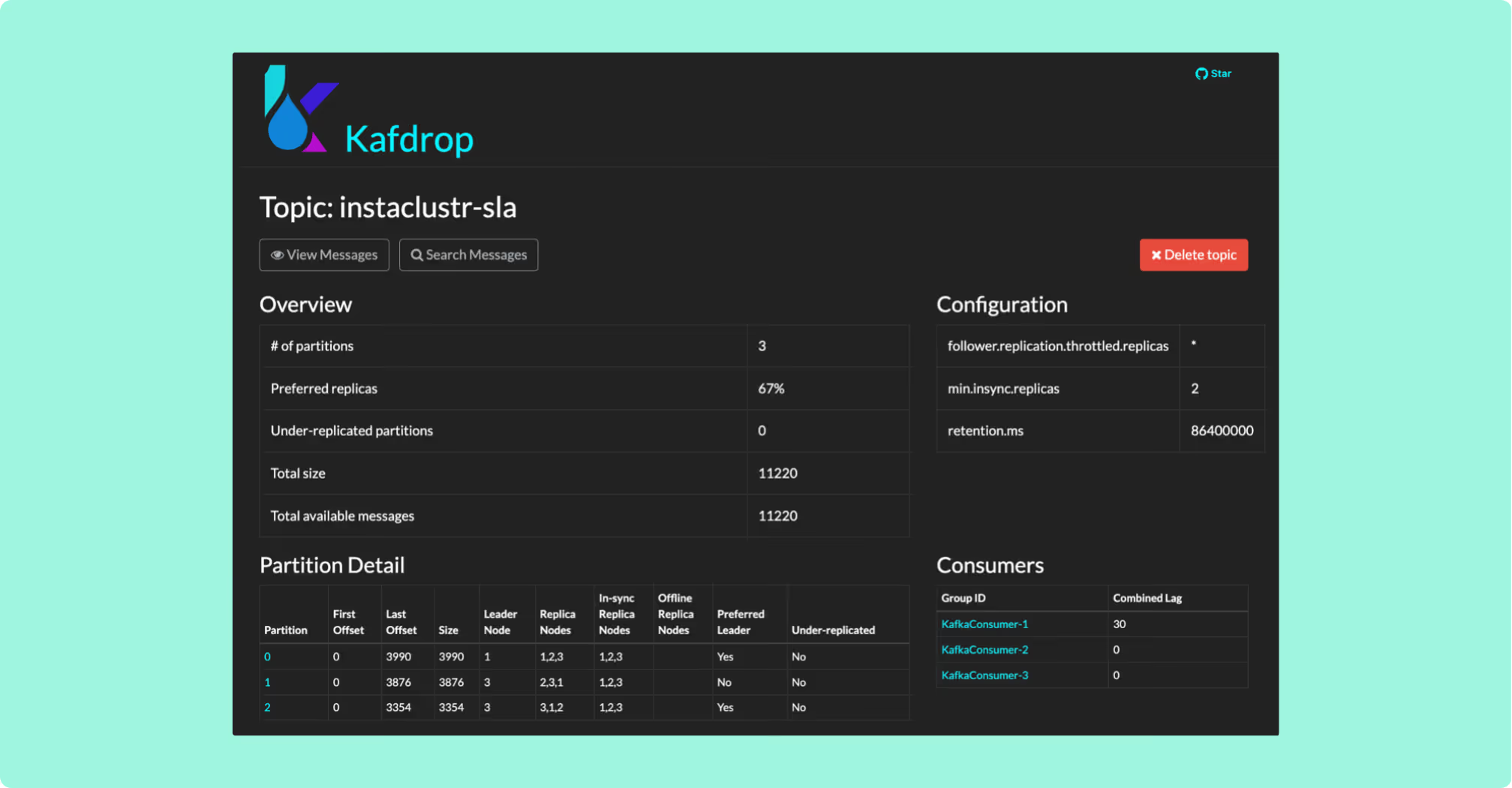
Kafdrop is an open-source Kafka UI built on Spring Boot, hosted in the obsidiandynamics/kafdrop repository under Apache 2.0. It runs as a single stateless Java process on Java 17 or newer against Kafka 0.11.0 or newer, serves on port 9000, and has no database and no separate backend behind it. That is why almost every tutorial reaches for it: there is nothing to provision before it starts. A ZooKeeper connection has not been required since 3.10.0.
- view brokers and topics
- browse messages in JSON, plain text, Avro and Protobuf
- view consumer groups with combined and per-partition lag
- create topics, view ACLs, and connect to Azure Event Hubs
What is Kadeck?
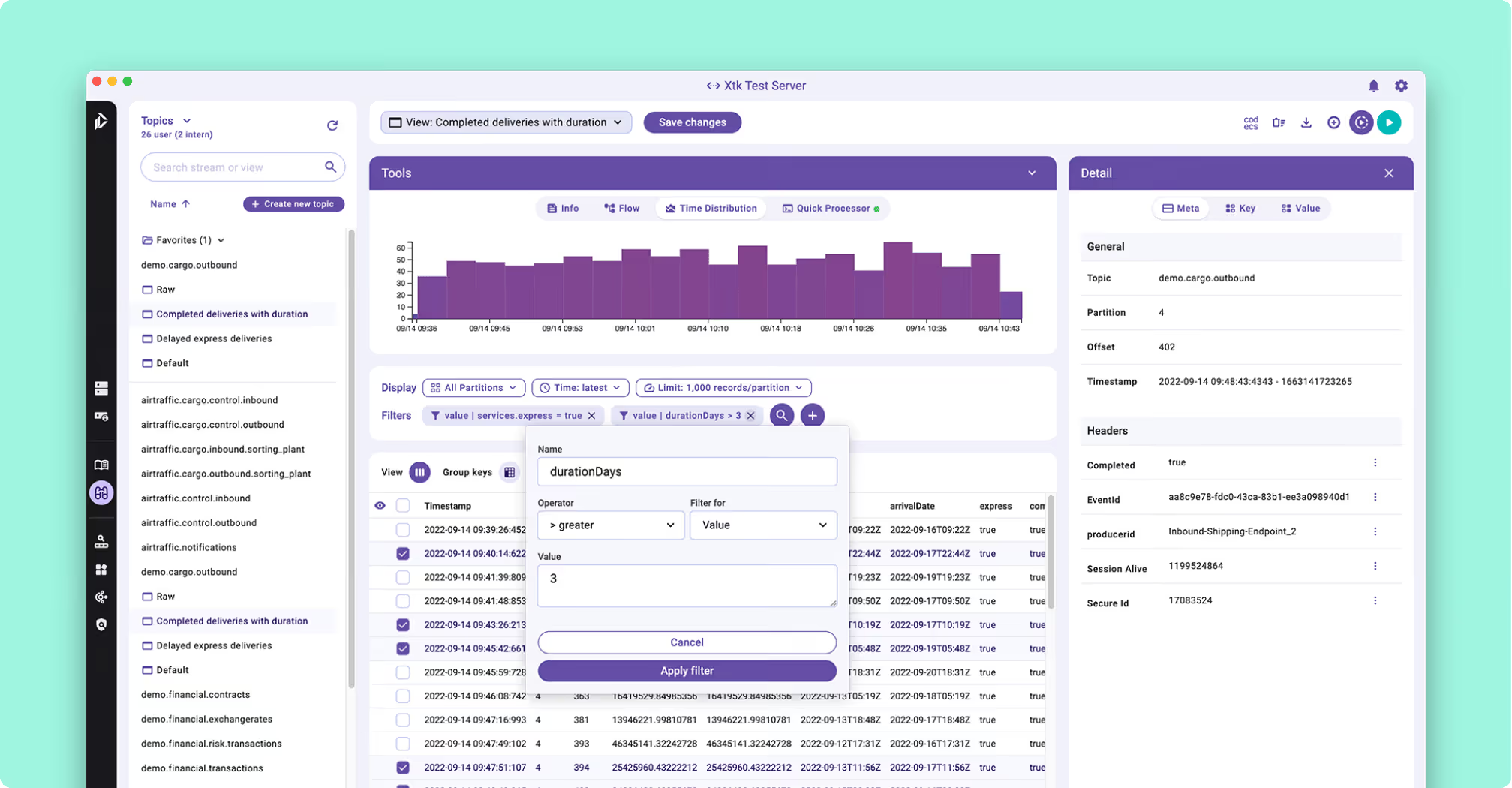
Kadeck is a commercially licensed Kafka management and data exploration tool from Xeotek. It is two product lines rather than two rungs of one ladder: a native desktop application for Linux, macOS and Windows, and a web and Teams edition shipped exclusively as a Docker image. Kafka, Redpanda and Amazon Kinesis are all supported as sources, and the Teams image is published at 7.x.
Data exploration is where it is genuinely strong. Avro is decoded through Confluent Schema Registry and laid out in columns rather than handed over as raw bytes, and a JavaScript QuickProcessor derives calculated fields from record values without anybody writing a streaming application. Dead letter queues in Kafka are usually cleared with a one-off script per incident; Kadeck documents the workflow instead, isolating the failed records, transforming them inline, previewing, re-ingesting to the source topic, then purging what was processed. It is read-oriented, so there is no mechanism to stream derived data back into a topic, and neither Kafka Streams nor ksqlDB is integrated. What it is built to do is let somebody query a Kafka topic and understand what came back.
What is the official 2026 pricing of Kadeck and Kafdrop?
Kafdrop is one tier: Apache 2.0, no licensing fee, no subscription, no commercial edition and no supported tier, so the software costs nothing and the whole cost is operator time.
Kadeck’s ladder does not run the way most readers assume. Professional at 19 US dollars per user per month is the Desktop line, and it carries no governance. The governed web product is Enterprise, at 32 US dollars per user per month with a ten-user minimum, so the entry price is 3,840 US dollars a year at any team size below ten. A Desktop licence does not upgrade into it: a team moving from individual desktop use to a governed deployment re-buys. Floating licences are offered at 30 or more users, and they are still per user underneath. Five people who need access control and an audit trail pay for ten seats. Fifty people are 19,200 US dollars a year, against nothing on Kafdrop and every failure owned in-house.
Where does each one run out?
The scoring is the same on both sides: five criteria, 10 points each, 50 in all, with every criterion counting once. Nothing sits behind a multiplier, so a total is the sum of its five marks and a reader can recompute it. The five are cost as teams grow, deployment footprint, support and maintenance, access control and audit, and multi-cluster reach, because those are the questions a Kafka interface is actually measured against after the first month: a second cluster, an access review with a date on it, an upgrade nobody owns, and a bill that moves when the team does. The widest gap between the two marks is on multi-cluster reach, where Kafdrop marks 1 and Kadeck marks 9. The marks come from the same matrix used on every comparison on this site, so a tool scores the same here as it does anywhere else, and the reason behind each mark is in the card below, under Why these scores.
The dependency figures in the cards below were read on 24 September 2026 from each project’s published release artefact and matched against the NVD and GitHub advisory databases, so they move whenever a release or an advisory lands. Kpow is self-hosted as well. What a licence buys here is not a different deployment model, it is a company under contract to ship the patched build.
 Rank 1
 Kadeck
kadeck.com
29 out of 50 Total
- Licence
- Per user per month, subscription
- Cost a year, ten people
- $6,720 all in
- Free tier
- 5 users, 1 cluster connection
- Cost as teams grow
- 4 out of 10
- Deployment footprint
- 4 out of 10
- Support and maintenance
- 6 out of 10
- Access control and audit
- 6 out of 10
- Multi-cluster reach
- 9 out of 10
Why these scores for Kadeck
- Cost as teams grow 4 out of 10
- The compare figure prices it per user per month on both paid tiers, and the governed tier is Enterprise at 32 US dollars a user with a ten-user minimum, so 3,840 US dollars a year below ten people where the other side is 0.
- Deployment footprint 4 out of 10
- The compare figure has the web edition shipping only as a Docker image, the documented Kubernetes path wanting a persistent external database, and the container validating its licence online on every start.
- Support and maintenance 6 out of 10
- On this page, support comes from a vendor under the licence already being paid per seat, and the container validates that licence online on every start.
- Access control and audit 6 out of 10
- The compare figure puts RBAC with LDAP and OpenID Connect, data masking through Data Protection Policies and audit logs all on Enterprise, above Professional.
- Multi-cluster reach 9 out of 10
- This page gives one cluster connection on the free tier and unlimited on the paid tiers, across Apache Kafka, Redpanda and Amazon Kinesis.
Kadeck’s governance is an Enterprise property. RBAC with LDAP and OpenID Connect, data masking through Data Protection Policies, and audit logs all sit above Professional, so the team that needs access control takes the ten-seat minimum with it.
Packaging: the web edition ships only as a Docker image, and the documented Kubernetes path wants a persistent external database.
Licence checks: every container start triggers an online validation call, and a lapsed licence removes the tool whether or not anybody chose to move it.
Offline: air-gapped deployments need offline activation through the admin panel, and CI deployments need challenge-response activation through the vendor’s API.
Export: CSV respects the column filters applied in the record table and JSON does not.
Cost a year: Enterprise is 32 US dollars per user per month with a ten-user minimum, so ten people are 3,840 US dollars a year in licence and fifty are 19,200. Two engineer-hours a month at 120 US dollars an hour is 2,880 US dollars a year, the same rate used on both sides of this page. Here those hours go on the Docker image, the external database the Kubernetes path wants and licence activation, which puts ten people at 6,720 US dollars a year all in. The licence rates are the vendor’s published prices from this page; the operator time is a Factor House estimate.
Kafdrop
github.com/obsidiandynamics/kafdrop
23 out of 50 Total
- Licence
- Apache 2.0, one tier, no paid tier
- Cost a year, ten people
- $11,520, all operator time
- Newest release
- 4.2.0, 31 July 2025
- Cost as teams grow
- 10 out of 10
- Deployment footprint
- 10 out of 10
- Support and maintenance
- 2 out of 10
- Access control and audit
- 0 out of 10
- Multi-cluster reach
- 1 out of 10
Why these scores for Kafdrop
- Cost as teams grow 10 out of 10
- The compare figure gives it free under Apache 2.0, one tier, with no commercial edition, no seat cap and no cluster cap, so adding an engineer never changes the bill.
- Deployment footprint 10 out of 10
- The compare figure gives one stateless Java process on Java 17 or newer, no database, serving on port 9000, which is the lightest thing on this page.
- Support and maintenance 2 out of 10
- The compare figure gives GitHub issues, with the newest tagged release 4.2.0 of 31 July 2025 and three KRaft failure reports closed as not planned.
- Access control and audit 0 out of 10
- The compare figure gives no access control at all, an NGINX basic-auth workaround in the README, and the authentication feature request closed as not planned.
- Multi-cluster reach 1 out of 10
- This page gives no multi-cluster management, so one deployment covers one cluster and a second cluster is a second instance.
Kafdrop has no built-in authentication and no access control of any kind. An instance reachable from the internet exposes full cluster visibility with no login barrier, and it exposes write operations with it. The README states this plainly and documents an NGINX basic-auth workaround, and it is a settled position rather than a backlog item: the feature request for authentication and authorisation was closed as not planned.
KRaft: three failure reports closed as not planned, none open, none filed since April 2025, and no KRaft support landed.
Reach: no multi-cluster management, no message search by key or value, and the message format set per topic by hand.
Scale: the topic view can take tens of minutes on a large cluster, and consumer group enumeration is the dominant cost.
Releases: the newest tag is 4.2.0 of 31 July 2025, so anything merged since is in no published image.
Staying patched: 4.3.0 shipped on 31 August 2026 bundling Tomcat 11.0.22, which had carried three critical advisories since 25 August, six days earlier. One of them, CVE-2026-65905, scores 9.8 and is an authentication bypass, and all three are still in the current release. Three releases have shipped in two years. Only 66 of its 118 bundled jars resolve to a Maven coordinate, so those counts are floors rather than totals.
Cost a year: Apache 2.0, one tier, no subscription and no commercial edition, so the software costs nothing and the whole cost is operator time. Eight engineer-hours a month at 120 US dollars an hour is 11,520 US dollars a year, the same rate used on both sides of this page. Here those hours go on fronting an instance with the README’s NGINX basic-auth workaround and on carrying a release line that stopped at 4.2.0. A Factor House estimate, not a price anybody publishes.
Which should you pick?
Kadeck scores 29 against Kafdrop’s 23 and is the pick wherever anybody has to log in, because Kafdrop has no authentication in the product and no vendor to escalate to. Kafdrop suits a free development viewer on a single cluster. Kadeck meters people, at a ten-user floor of 3,840 US dollars a year, so a team whose headcount is growing should shortlist Kpow by Factor House, priced per cluster.
Pick Kafdrop if:
- the job is local development on one cluster, on a laptop
- somebody wants to see what is flowing through a topic in the next five minutes
- the deployment should hold no state and be removable by deleting a container
Pick Kadeck if:
- a shared cluster carries an audit or access-control requirement
- the team is under ten people and the ten-seat floor is affordable
- the daily work is decoding awkward payloads and recovering dead-letter queues
Two things settle before either: an air-gapped or ephemeral CI environment should read Kadeck’s offline activation path first, because the licence call on container start is the deciding fact and no feature list surfaces it; and a KRaft cluster or Apache Kafka 4.x should establish Kafdrop’s position first, because it is settled and closed. Underneath all of it, one of these asks for money and the other asks for attention. If the shortlist is still open, the free Kafka UI tools ranked on what their free tiers hold back is the wider field these two sit in, and the Kafka RBAC tools compared is where the access-control question Kafdrop closed gets answered properly.
Kpow: self-managed and vendor-agnostic, priced to the cluster
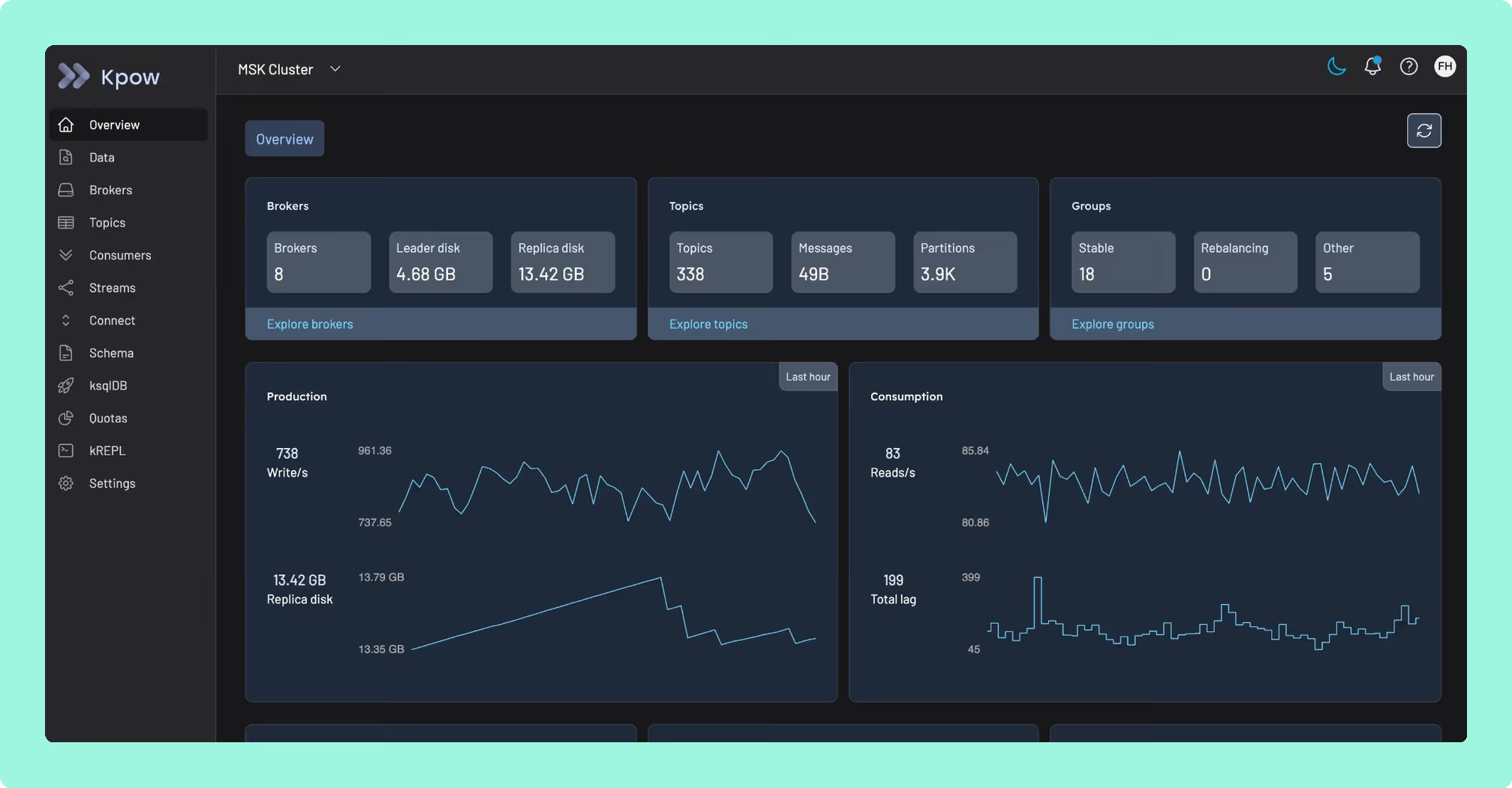
Kadeck adds a seat to the bill every time the team grows, and its ten-seat Enterprise floor is the price of finally getting RBAC and an audit trail. Kafdrop skips that bill entirely, but there is no vendor on the other end of it either: no authentication in the product, and the feature request for it closed as not planned, so the interface stays free precisely because nobody backs it. Kpow by Factor House takes neither trade: self-managed and vendor-agnostic, it runs against whichever cluster you already have, priced per cluster rather than per seat, as one stateless JVM container with no external database and room for up to 12 clusters from a single instance.
Self-managed and vendor-agnostic settles the question by the cluster, not by who answers the phone when something breaks. Weigh that published, per-cluster price against a per-seat bill in full on Kpow’s product page.
How these tools were scored
Every option is scored from 0 to 10 on each criterion, from the evidence and sources this page cites, and the reason for each score is on its card. Each criterion counts once, for a total out of 50. The options are listed by total.
Sources
- Apache Kafka 4.0 release announcement
- Apache Kafka documentation on authorization
- Apache Kafka documentation on consumer groups