At a glance
Offset Explorer and Kafdrop are scored here on the same five criteria, 50 points in all: Offset Explorer 26 out of 50, Kafdrop 23 out of 50. Offset Explorer takes its best score on Deployment footprint (7 out of 10) and its lowest on Access control and audit (1 out of 10). Cost a year: About $14,080 in year one for 20 seats (this page's estimate). Kafdrop takes its best score on Cost as teams grow (10 out of 10) and its lowest on Access control and audit (0 out of 10). Cost a year: $0 licence, $11,520 in operator time (this page's estimate).
Kafdrop vs Offset Explorer, compared
Kpow meets 7 of 8 requirements on this page.
Key takeaway
Kafdrop and Offset Explorer both put a screen in front of a Kafka cluster somebody else runs, one deployed once and opened in a browser, the other installed on every engineer’s machine with nothing running server-side. Kafdrop is free under Apache 2.0 with no paid tier; Offset Explorer costs from 139 US dollars per named user. Neither authenticates a person to itself, and once a connection to the broker is open, who may do what is settled outside the product. Apache Kafka 4.0 supports only KRaft. Kpow by Factor House is licensed per cluster at a published price.
Kpow live demo
Test the trade-offs in a live Kafka UI
You have compared Kafdrop vs Offset Explorer. Open a live Kpow environment to test the everyday workflows a shared Kafka platform needs.
Built for platform and data teams managing shared Kafka clusters.
Try the Kpow demoWhat is Kafdrop?
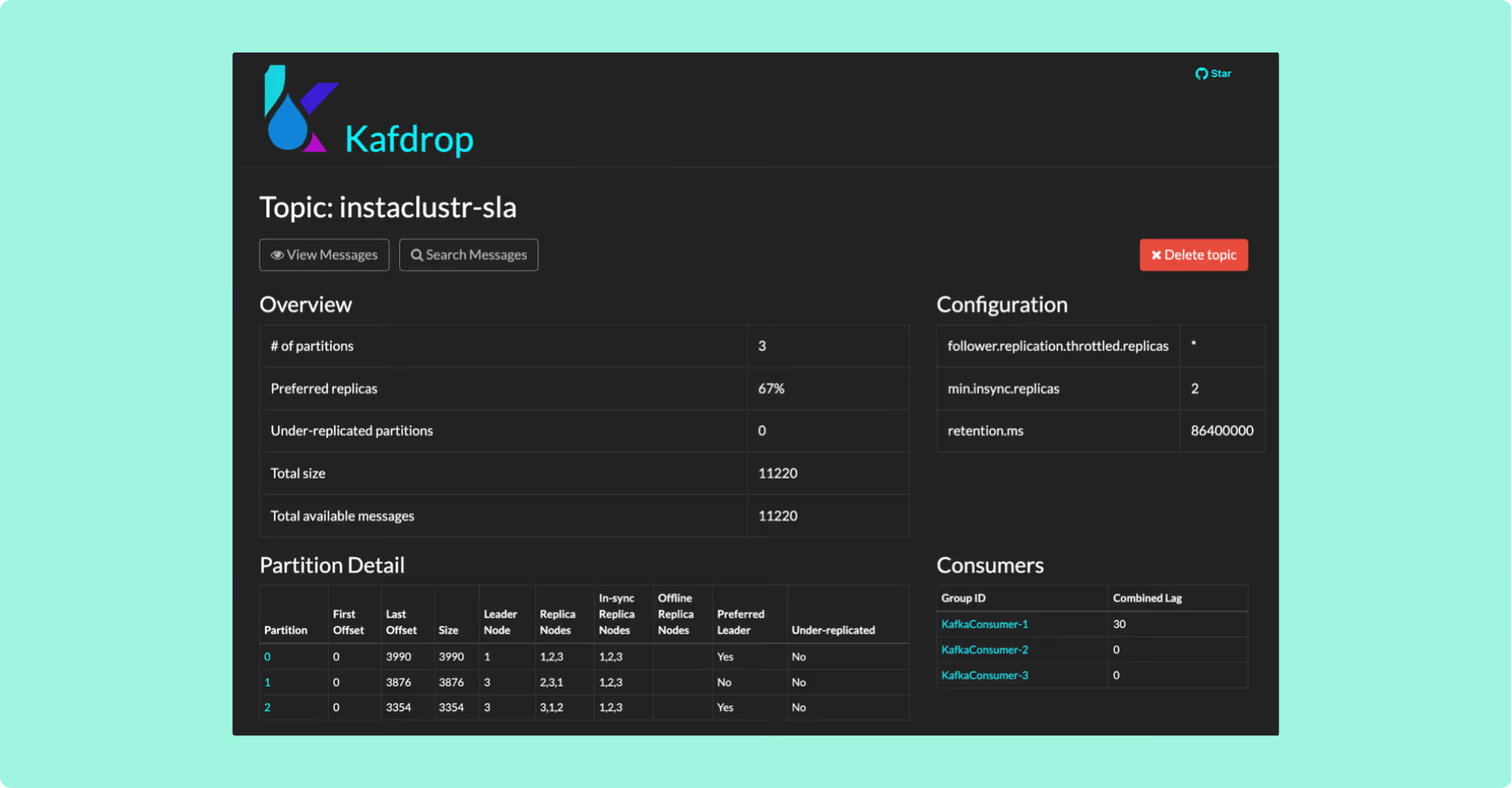
Kafdrop is an open-source Kafka web interface under Apache 2.0, built on Spring Boot and maintained by the Obsidian Dynamics team. It runs as one stateless Java process with no backend datastore, wants Java 17 or newer against Kafka 0.11.0 or newer, and serves on port 9000. That statelessness is why it is the tutorial default: it starts in seconds, there is nothing to back up, and deleting the container removes every trace of it. Schema Registry is the one optional integration.
- view brokers and topics
- browse messages as JSON, plain text, Avro and Protobuf
- view consumer groups with combined and per-partition lag
- create topics, view ACLs, and connect to Azure Event Hubs
The project is moving: Java 25 landed in December 2025 and Spring Boot 4.1 in August 2026, with community feature work merging through the same month. The newest tagged release is still 4.2.0 from July 2025, so those merges are in no published image. The position that decides more is KRaft: Apache Kafka 4.0 supports only KRaft mode, and Kafdrop has closed its KRaft requests as not planned, the last in April 2025.
What is Offset Explorer?
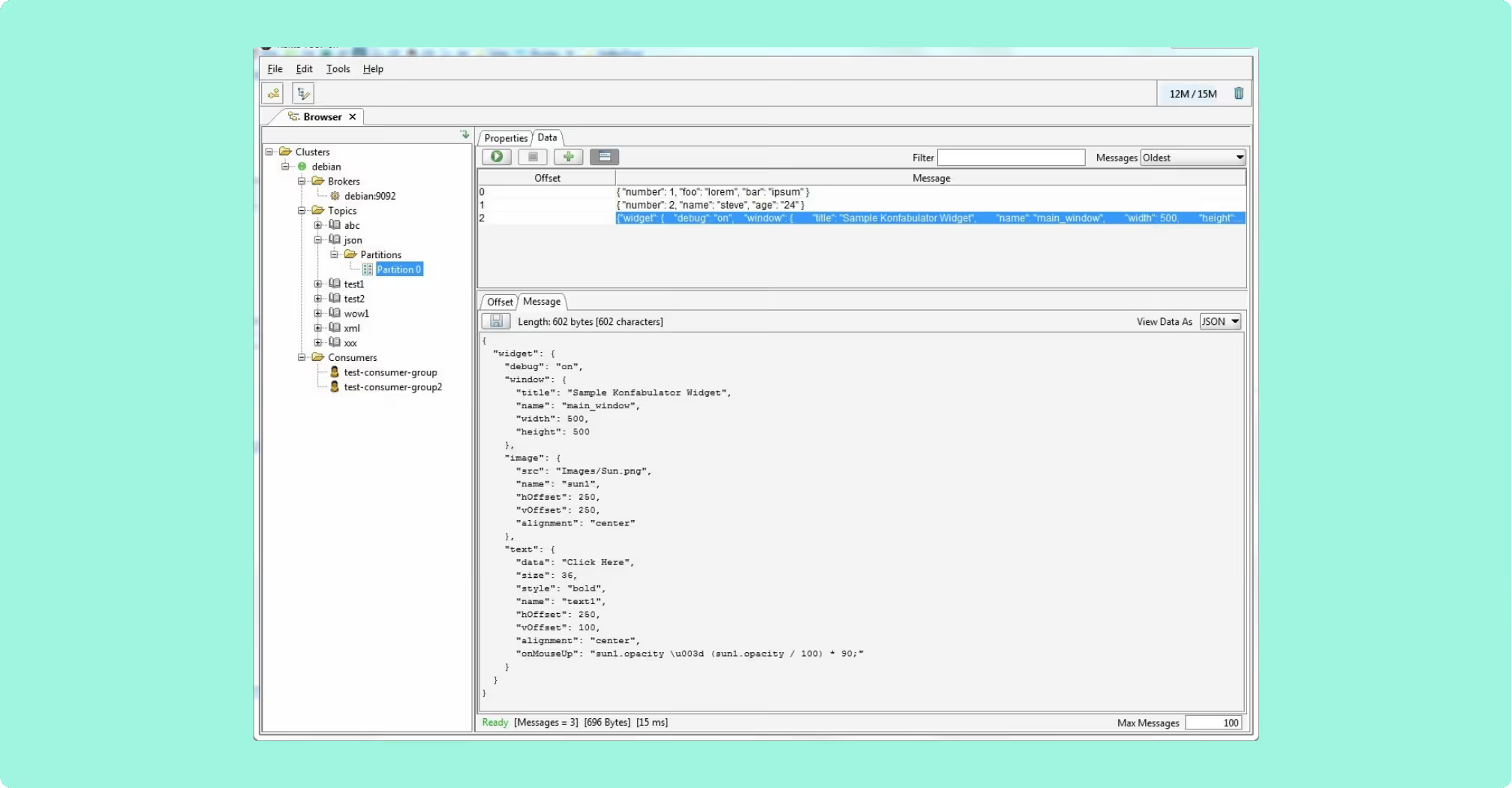
Offset Explorer is a desktop GUI for Apache Kafka from DB Solo, LLC, installed on an engineer’s own machine with nothing running server-side. It runs on Windows, Linux and macOS and supports Kafka 0.11 and above. The Windows and macOS builds bundle a JRE, so installation is one download; the Linux build does not, so Java 21 or later goes on first. It was renamed from Kafka Tool, and both names refer to one product.
- Search: string, binary, Avro, Protobuf, JSON Schema, regular expressions and JsonPath, so you can query a Kafka topic by content rather than by offset.
- Integrations: Schema Registry, Kafka Connect and ksqlDB, plus a Compare Clusters tool.
- Plugins: a Java class implementing a decorator interface, shipped as a jar and chosen per topic.
- Command line tool:
exportMessages,findMessages,compareClustersandgenerateDataagainst a saved project file, with real exit codes.
Version 4.0.4 added Compare Clusters, and 4.0.3 added KRaft quorum support, broker quotas, a script generator and the ability to delete records in Kafka. None of that moves where the state lives: consumer position, group description and offset reset are broker-side operations, so both tools read and write the same broker state.
What is the official 2026 pricing of Kafdrop and Offset Explorer?
Kafdrop is free under Apache 2.0. One tier, no commercial edition, and nothing to buy, so the bill does not move when the team grows. Offset Explorer is a purchase per named user on a banded ladder, cheaper per seat the more seats you buy. Personal use is free with no time limit, and commercial, educational and non-profit use each require a licence after a 30-day evaluation. Five engineers is five licences at 139 US dollars each, or 695. Fifty is fifty at 119, or 5,950. A machine several people share needs a licence for every person who uses it.
A cluster of roughly 1,010 topics and 2,000 partitions took over 30 minutes to load, with 5,566 consumer groups the dominant cost, and the interface loaded in under a minute once that enumeration was disabled. A stale bot closed the issue in January 2022. That is the trade running through the best Kafka management tools at this end of the market: one side bills headcount, and the other bills whoever on your team reads the issue tracker.
Where does each one run out?
Both are scored out of 50, as five criteria marked out of 10, and each criterion carries the same weight as the others. Nothing sits behind a multiplier, so a total is the sum of its five marks and a reader can recompute it. The five are cost as teams grow, deployment footprint, support and maintenance, access control and audit, and multi-cluster reach, because those are the questions a Kafka interface is actually measured against after the first month: a second cluster, an access review with a date on it, an upgrade nobody owns, and a bill that moves when the team does. The widest gap between the two marks is on multi-cluster reach, where Kafdrop marks 1 and Offset Explorer marks 7. The marks come from the same matrix used on every comparison on this site, so a tool scores the same here as it does anywhere else, and the reason behind each mark is in the card below, under Why these scores.
The dependency figures in the cards below were read on 24 September 2026 from each project’s published release artefact and matched against the NVD and GitHub advisory databases, so they move whenever a release or an advisory lands. Kpow is self-hosted as well. What a licence buys here is not a different deployment model, it is a company under contract to ship the patched build.
 Rank 1
 Offset Explorer
kafkatool.com
26 out of 50 Total
- Cost a year
- About $14,080 in year one for 20 seats (this page's estimate)
- Pricing unit
- Per named user. $139 at 1 to 10, $128 at 11 to 20
- Who it authenticates
- Nobody. Client to broker only
- Cost as teams grow
- 5 out of 10
- Deployment footprint
- 7 out of 10
- Support and maintenance
- 6 out of 10
- Access control and audit
- 1 out of 10
- Multi-cluster reach
- 7 out of 10
Why these scores for Offset Explorer
- Cost as teams grow 5 out of 10
- Per named user, 139 US dollars at 1 to 10, 128 at 11 to 20 and 119 at 21 to 50, then 46 a year, free for personal use only. On this page, five engineers is 695 US dollars and fifty is 5,950, and a machine several people share needs a licence for every person who uses it.
- Deployment footprint 7 out of 10
- Nothing server-side, a desktop install per engineer with a bundled JRE, and configuration per workstation passed around as files. This page adds that the Windows and macOS builds bundle a JRE so installation is one download, and the Linux build does not, so Java 21 or later goes on first.
- Support and maintenance 6 out of 10
- DB Solo support under the maintenance the purchase includes, 365 days then 46 US dollars per licence a year. This page records that the documentation set names no topic covering KRaft mode, transactions or tiered storage.
- Access control and audit 1 out of 10
- It authenticates the connection only, the application holds no identity, and there is no audit trail. On this page, SASL, SSL and OAUTHBEARER are client to broker, so there is no user identity for a role model to key on and no server-side record of what anybody did.
- Multi-cluster reach 7 out of 10
- Kafka 0.11 and above, Event Hubs, MSK and Confluent Cloud, with each workstation holding its own list. This page dates Compare Clusters to 4.0.4, and the list travels as exported files, so two people drift apart the moment one edits an entry.
Offset Explorer’s documented authentication is client to broker only: SASL over plaintext or SSL with JAAS, SSL with a truststore and optional client certificates, and OAUTHBEARER. Nothing authenticates a person to the application itself, so there is no user identity for a role model to key on and no server-side record of what anybody did.
Governance: the feature list names no role-based access control and no data masking, so RBAC for Kafka is something the cluster enforces and this product reports.
Shared view: no shared deployment, and no Kafka management console a second person can be pointed at.
Configuration: per workstation, travelling as exported files, so two people drift apart the moment one edits an entry.
Documentation: the set names no topic covering KRaft mode, transactions or tiered storage.
What it costs a year: 2,560 US dollars for twenty engineers in the 11 to 20 band, then 920 a year to stay in maintenance. Add this page’s estimate rather than a vendor price, at 120 US dollars an engineer hour: eight hours a month for a tool with no access control of its own, spread across twenty workstations and the connection files they pass around, is 11,520 a year, so about 14,080 in the first year and 12,440 after it. Kpow on one cluster is its published 4,500 plus 2,880 of the same modelled operator time, so 7,380 a year, and that buys a shared deployment and an audit trail, neither of which this product has at any price.
Compare Kpow vs Offset ExplorerLenses vs Offset ExplorerKafka Tool download guide
23 out of 50 Total
- Cost a year
- $0 licence, $11,520 in operator time (this page's estimate)
- Finding a message
- Browse by offset. No search by key or value
- Newest published release
- 4.2.0, 31 July 2025
- Cost as teams grow
- 10 out of 10
- Deployment footprint
- 10 out of 10
- Support and maintenance
- 2 out of 10
- Access control and audit
- 0 out of 10
- Multi-cluster reach
- 1 out of 10
Why these scores for Kafdrop
- Cost as teams grow 10 out of 10
- Apache 2.0, the whole product, no seat or cluster cap. This page gives one tier and nothing to buy, so the bill does not move when the team grows.
- Deployment footprint 10 out of 10
- One stateless Java process with no database and no sidecar. On this page, that is Java 17 or newer, serving on port 9000, with nothing to back up and no trace left when the container is deleted.
- Support and maintenance 2 out of 10
- Newest tagged release 4.2.0 of July 2025, KRaft requests closed as not planned, GitHub issues only. This page makes the escalation path the issue tracker, because there is no support tier and no other channel.
- Access control and audit 0 out of 10
- No authentication mechanism at all, an NGINX basic-auth workaround, and write operations exposed with no read-only mode. On this page, an instance anybody can reach is a console where anybody can create or delete a topic.
- Multi-cluster reach 1 out of 10
- One cluster per deployment with no multi-cluster view. This page scores Offset Explorer higher because each workstation holds its own cluster list and a Compare Clusters tool with it.
Kafdrop implements no authentication mechanism, and its own README says so before documenting an NGINX basic-auth workaround. The feature request was opened in January 2026 and closed as not planned in February, so this is a settled scope decision. There is no read-only mode either, so an instance anybody can reach is a console where anybody can create or delete a topic, and the Kafka security architecture around it is a proxy somebody has to deploy and keep configured.
Reach: one cluster per deployment, with no multi-cluster view.
Search: no message search or filtering by key or value, and the deserialization format set per topic by hand.
MSK IAM: never landed. Two pull requests have been open since 2021 and 2023 and both now conflict with master.
Support: the escalation path is the issue tracker, because there is no support tier and no other channel.
Staying patched: 4.3.0 shipped on 31 August 2026 bundling Tomcat 11.0.22, which had carried three critical advisories since 25 August, six days earlier. One of them, CVE-2026-65905, scores 9.8 and is an authentication bypass, and all three are still in the current release. Three releases have shipped in two years. Only 66 of its 118 bundled jars resolve to a Maven coordinate, so those counts are floors rather than totals.
What it costs a year: nothing to licence, where the tool beside it bills every named user. This page’s estimate rather than a vendor price, at 120 US dollars an engineer hour: eight hours a month to run it and to keep the NGINX basic-auth proxy that stands in for a login is 11,520 US dollars a year, and neither tool on this page authenticates a person at any price. Kpow on one cluster is its published 4,500 plus 2,880 of the same modelled operator time, so 7,380 a year with 100 users included.
Which should you pick?
Offset Explorer scores 26 against Kafdrop’s 23, and the choice between them is a deployment model: Kafdrop is opened once in a browser, Offset Explorer installed on every engineer’s machine from 139 US dollars. Neither authenticates a person, so who may do what is settled outside both products. A team that needs role-based access and an audit view inside the product should shortlist Kpow by Factor House.
Take Kafdrop if:
- the cluster is development or test, used by one team
- nothing sensitive passes through it
- the tool only has to exist for the twenty minutes you need it
Take Offset Explorer if:
- the job is finding a message rather than scrolling to it
- a payload format has to be decoded that nothing else reads
- the tool has to run somewhere other than in front of a person, with exit codes and JSON or CSV output
If the cluster is production and more than one person needs to look at it, neither is enough unaided: the access decision is made outside the tool in both cases, and somebody has to actually make it. And if you are moving to Kafka 4.x, take both published positions at face value and test before committing. One project has closed its KRaft requests as not planned. The other shipped KRaft quorum support in 4.0.3, and what that covers is worth confirming against your own cluster.
If finding one specific record is the job rather than watching a cluster, Kafka message search tools compares what each option can search on, and the best free Kafka UI tools covers the free end of the same field.
Kpow: the access question decided once, not per engineer
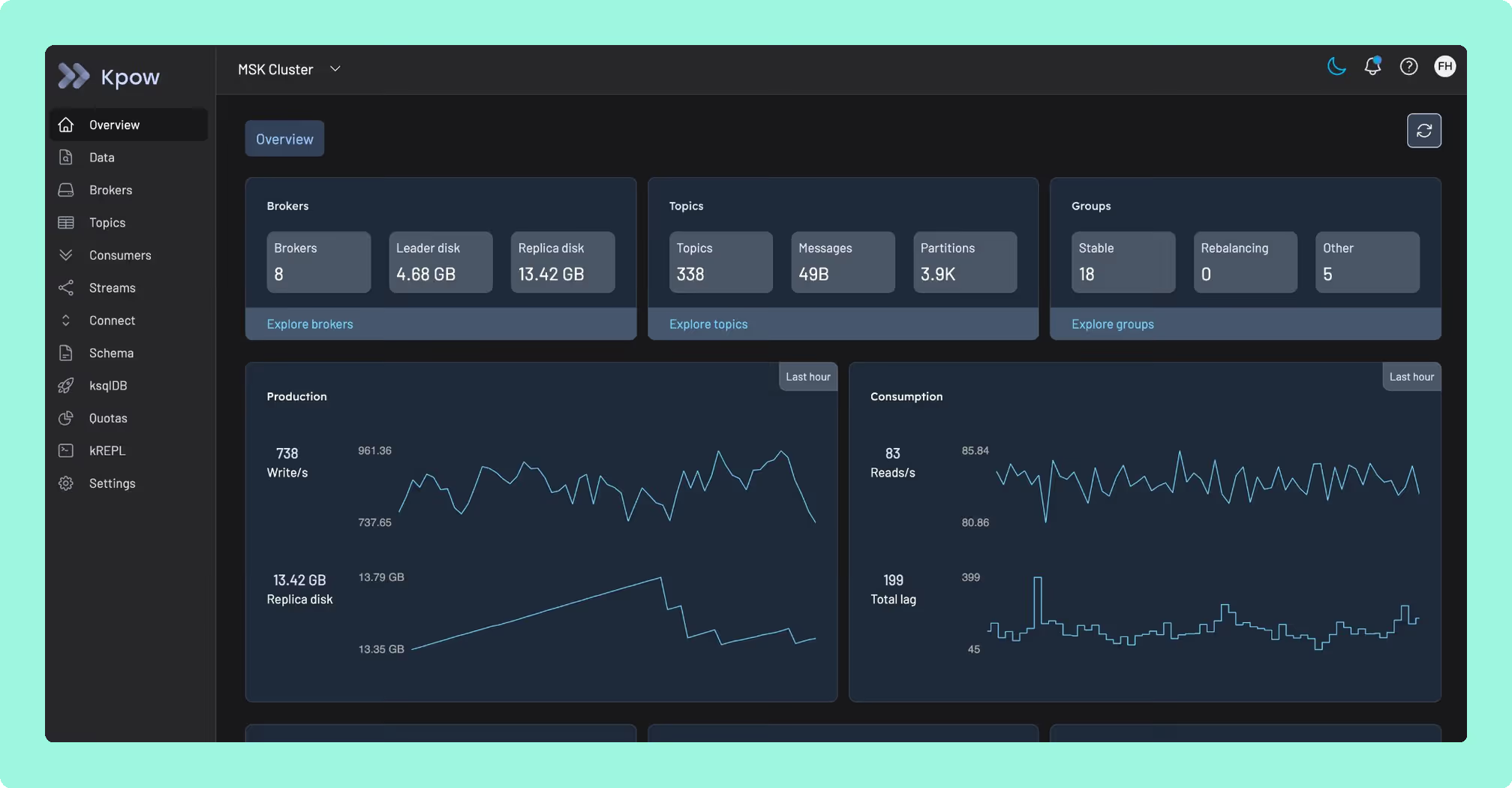
Neither Kafdrop nor Offset Explorer settles who is allowed near a shared cluster. Kafdrop implements no authentication mechanism at all, so keeping it safe means putting an NGINX basic-auth workaround in front of it, with no read-only mode behind that either. Offset Explorer authenticates the connection to the broker rather than the person opening the application, so there is no user identity for a role model or an audit trail to key on, and the licence itself is priced per named user rather than per cluster. Kpow by Factor House is licensed per cluster at a published price instead, so adding an engineer does not change what you pay. It runs as one stateless JVM container with no external database, managing up to 12 clusters from a single instance.
See that published per-cluster price in full on Kpow’s product page, and decide the access question once rather than per engineer.
How these tools were scored
Every option is scored from 0 to 10 on each criterion, from the evidence and sources this page cites, and the reason for each score is on its card. Each criterion counts once, for a total out of 50. The options are listed by total.
Sources
- Apache Kafka 4.0 upgrade documentation
- Apache Kafka documentation on basic operations
- Apache Kafka documentation on authorization and ACLs