At a glance
Kafbat UI and Lenses are scored here on the same five criteria, 50 points in all: Kafbat UI 38 out of 50, Lenses 26 out of 50. Kafbat UI takes its best score on Cost as teams grow (10 out of 10) and its lowest on Support and maintenance (5 out of 10). Cost a year: $0 licence, about $8,640 in operator time (this page's estimate). Lenses takes its best score on Access control and audit (7 out of 10) and its lowest on Deployment footprint (2 out of 10). Cost a year: $4,000 per cluster to 15 users, custom above, plus about $2,880 in ops.
Kafbat UI vs Lenses, compared
Kpow meets 4 of 6 requirements on this page. 2 rows are not a yes or no question.
Key takeaway
Kafbat UI and Lenses both run on top of a Kafka cluster somebody else operates. Kafbat UI is free under Apache 2.0 with no seat or cluster cap, shipping role-based access control, six identity provider types, server-side masking and a built-in audit log at no cost. Lenses meters by user count instead: Community stops at 5, Team starts at 4,000 US dollars a year for up to 15, and HQ needs PostgreSQL plus a database behind every Agent. SQL Studio has no Kafbat equivalent. Kpow by Factor House is licensed per cluster at a published price.
Kpow live demo
Test the trade-offs in a live Kafka UI
You have compared Kafbat UI vs Lenses. Open a live Kpow environment to test the everyday workflows a shared Kafka platform needs.
Built for platform and data teams managing shared Kafka clusters.
Try the Kpow demoWhat is Kafbat UI?
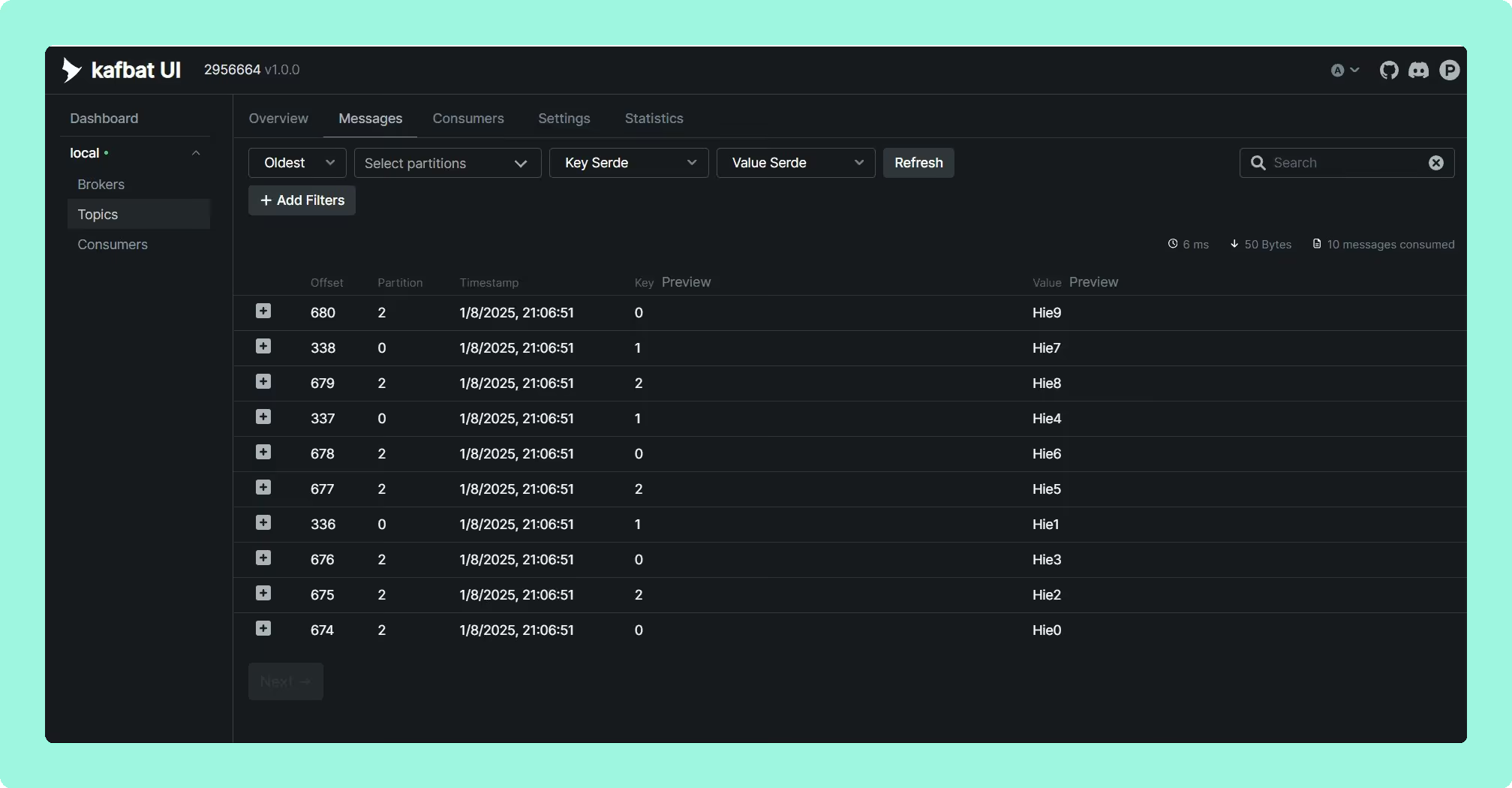
Kafbat UI is a free, open-source web dashboard for observing and managing Kafka clusters, licensed Apache 2.0 with no source-available restriction on production use. It deploys as a container rather than per engineer, and one deployment reaches many clusters. The application is stateless and computes its views from the cluster on request, so it runs as ordinary replicas with no attached storage and no external database. A cluster is addressed with bootstrap-servers and ordinary Kafka client properties, so it reaches a KRaft cluster with no broker-side change, and Amazon MSK, Azure Event Hubs and Google Cloud are covered with cloud IAM integration.
The lineage matters more here than it usually would, because two projects answer to nearly the same name. Kafbat UI is the maintained continuation of the Provectus kafka-ui project, carried forward by contributors who were there at that project’s inception. The predecessor has shipped no release since v0.7.2 in April 2024 and taken no commit since that July, and it still carries roughly five times the stars.
What is Lenses?
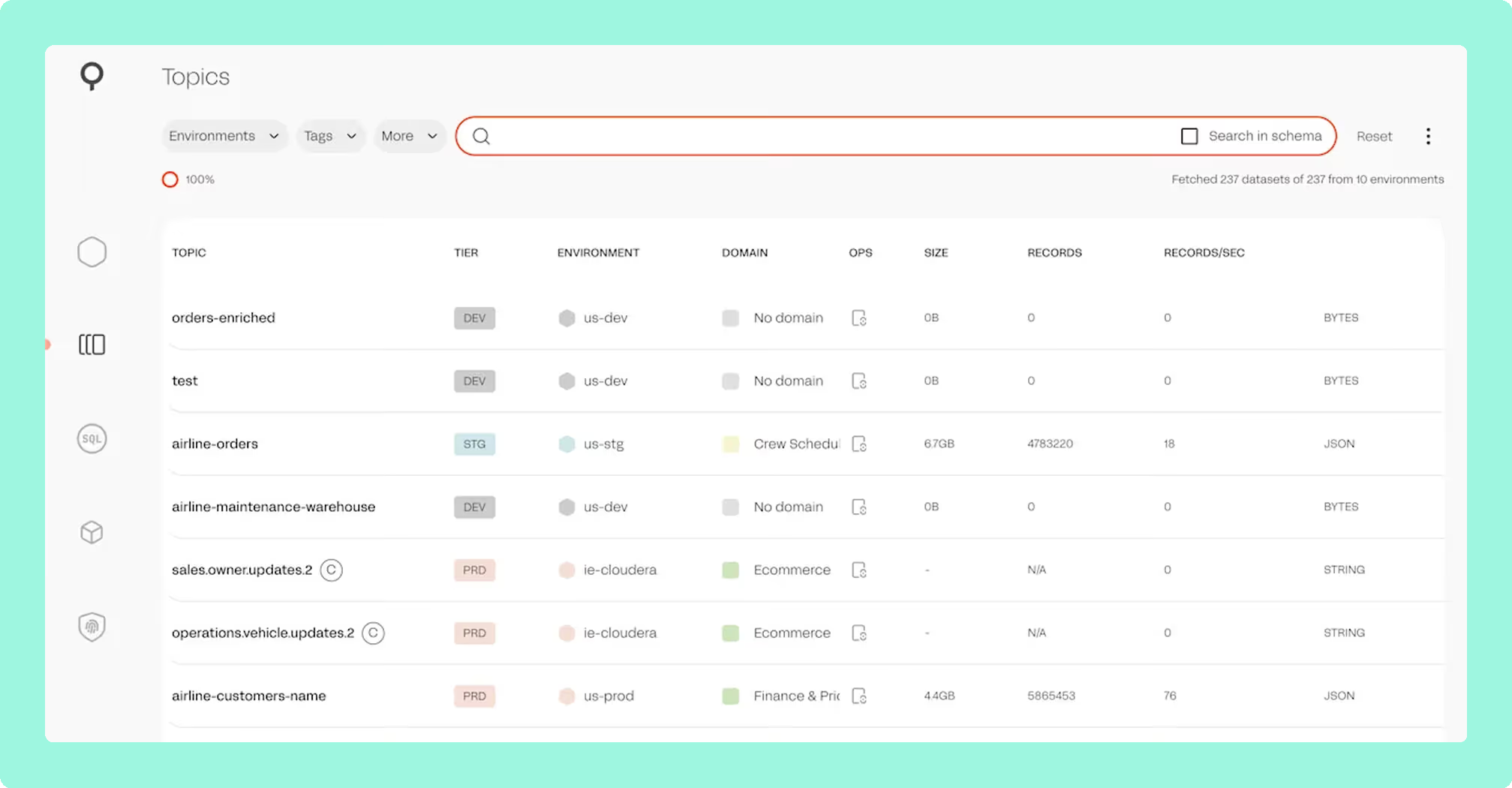
Lenses is a commercial governance and data-exploration platform for Kafka, and its differentiator is SQL Studio, a SQL interface for querying topics without writing consumer code. That is a different job from the one a cluster console does: Lenses is a query and catalogue layer aimed at somebody who is not Kafka-savvy, and Kafbat UI is an operations console aimed at somebody holding an incident. Celonis acquired Lenses in early 2022, and the 6.x line is active through 6.2.6 in August 2026.
- Architecture: a central Lenses HQ node with lightweight Agents deployed per cluster, connecting as standard Kafka clients.
- Topology and lineage: one view across producers, topics, connectors and consumers.
- Data catalogue: topics grouped by logical domain.
- SQL Processors: Kubernetes-native stream processing built on Kafka Streams, defined in SQL.
What is the official 2026 pricing of Kafbat UI and Lenses?
Kafbat UI costs nothing to license at any size: no paid tier, no seat cap and no cluster cap on the software. What the company sells is professional services around it, covering architecture review, custom implementation, scaling work, security and compliance, and 24/7 enterprise support, none of it publicly priced. At five engineers and at fifty the licence line is the same number, so the real cost is operator time plus whatever support arrangement gets negotiated.
Lenses meters by user count, and the steps are the whole story. Community is free for up to 5 users with Basic Auth, the Lenses UI and MCP. Team starts at 4,000 US dollars a year for up to 15 users, and it is where SSO, SAML, RBAC and Team Support begin. Above 15 users the tier is Multi-Kafka Enterprise at custom pricing. Replication is a second meter: K2K Community is free with a maximum of 5 topic partitions per replication job, and K2K Enterprise starts at 1,000 US dollars a month, includes 5 clusters and charges 200 a month for each cluster after. The last cost is deployment: one of these is a container, and the other is a control plane with a database behind every part of it.
Where does each one run out?
Both are scored out of 50, as five criteria marked out of 10, and each criterion carries the same weight as the others. Nothing sits behind a multiplier, so a total is the sum of its five marks and a reader can recompute it. The five are cost as teams grow, deployment footprint, support and maintenance, access control and audit, and multi-cluster reach, because those are the questions a Kafka interface is actually measured against after the first month: a second cluster, an access review with a date on it, an upgrade nobody owns, and a bill that moves when the team does. The widest gap between the two marks is on cost as teams grow, where Kafbat UI marks 10 and Lenses marks 4. The marks come from the same matrix used on every comparison on this site, so a tool scores the same here as it does anywhere else, and the reason behind each mark is in the card below, under Why these scores.
The dependency figures in the cards below were read on 24 September 2026 from each project’s published release artefact and matched against the NVD and GitHub advisory databases, so they move whenever a release or an advisory lands. Running it yourself is common to both. What differs is whether somebody is contracted to produce the fix.
 Rank 1
 Kafbat UI
38 out of 50 Total
- Cost a year
- $0 licence, about $8,640 in operator time (this page's estimate)
- Free tier
- The whole product, nothing held back
- External dependencies
- None: no database, no sidecar, no storage
- Cost as teams grow
- 10 out of 10
- Deployment footprint
- 8 out of 10
- Support and maintenance
- 5 out of 10
- Access control and audit
- 6 out of 10
- Multi-cluster reach
- 9 out of 10
Why these scores for Kafbat UI
- Cost as teams grow 10 out of 10
- Apache 2.0 with no paid tier, no seat cap and no cluster cap. On this page, the licence line is the same number at five engineers and at fifty.
- Deployment footprint 8 out of 10
- A stateless container with a published Helm chart that computes its views from the cluster on request, so it runs as ordinary replicas with no attached storage, docked for the configuration wizard’s mounted volume.
- Support and maintenance 5 out of 10
- It shipped v1.5.0 in April 2026 with commits still arriving between releases, but no support commitment of its own, so response times, escalation and fixes come out of an unpriced services engagement.
- Access control and audit 6 out of 10
- Access control per resource type with regular-expression role subjects, six identity provider types, server-side masking with three policy types and an audit log to a Kafka topic, docked because the audit level defaults to ALTER_ONLY and masking is pattern-driven. Lenses edges it on the in-product audit view; the difference in what governance costs sits in the cost bar.
- Multi-cluster reach 9 out of 10
- One deployment reaches many clusters, against one Agent per Kafka cluster on the other side.
Kafbat UI publishes no support commitment of its own, so response times, escalation and fixes come out of a services engagement. Patching is yours, and there is a record to patch against: three remote-code-execution flaws stand across the two lineages, scored 8.9, 8.8 and 8.1 on NVD, two of them reachable with no authentication at all. On the dormant predecessor the remedy is an upgrade to 0.7.2, the last release it ever made.
Audit level: defaults to ALTER_ONLY, so who looked at something is not captured until an operator sets ALL.
Audit topic: must not be compacted, because records carry no key, and its partition count defaults to 1.
Masking: per cluster and pattern-driven, so coverage depends on the patterns somebody wrote.
Releases: five tags in 2025, then v1.5.0 in April 2026, with commits still arriving between releases.
Staying patched: v1.5.0 shipped in April 2026 and nothing has shipped since. In the 157 days after it, at least 20 high or critical advisories were published against libraries that release bundles, including a critical in netty. Only 150 of its 266 bundled jars resolve to a Maven coordinate, so that is a floor rather than a total, and the state of the release itself is unmeasured. Kafbat does publish a security policy, which AKHQ and Kafdrop do not.
What it costs a year: nothing to licence at any user count, where the tool beside it meters them. This page’s estimate rather than a vendor price: on twenty engineers and three clusters, six engineer-hours a month covering the container, the upgrade line, CVE response, the identity provider wiring, the masking patterns and the audit topic is 8,640 US dollars a year at 120 US dollars an hour, and none of those hours are database administration. A Kpow licence on the same three clusters is 13,500 US dollars a year at its published 4,500 per cluster.
Compare Kpow vs Kafbat UIKadeck vs Kafbat UIKafbat UI review
 Rank 2
 Lenses
lenses.io
26 out of 50 Total
- Cost a year
- $4,000 per cluster to 15 users, custom above, plus about $2,880 in ops
- Free tier
- Community, up to 5 users, no SSO and no RBAC
- External dependencies
- PostgreSQL for HQ, plus a database per Agent
- Cost as teams grow
- 4 out of 10
- Deployment footprint
- 2 out of 10
- Support and maintenance
- 6 out of 10
- Access control and audit
- 7 out of 10
- Multi-cluster reach
- 7 out of 10
Why these scores for Lenses
- Cost as teams grow 4 out of 10
- Metered by user count. On this page, Community stops at 5 users, Team starts at 4,000 US dollars a year for up to 15, above that is Multi-Kafka Enterprise at custom pricing, and K2K replication is a second meter from 1,000 US dollars a month.
- Deployment footprint 2 out of 10
- A central HQ on PostgreSQL as its only supported store plus an Agent and an Agent database for every cluster, so a four-cluster estate is one HQ, four Agents and five databases. The Community edition carries the same dependency.
- Support and maintenance 6 out of 10
- A vendor under contract with Team Support beginning at Team, docked because the HQ deployment sets replicas to 1 and defaults to a Recreate update strategy, so an upgrade terminates HQ before starting its replacement.
- Access control and audit 7 out of 10
- SSO, SAML and RBAC from Team with in-product audit logs, docked because data policies match on field name across every registered dataset and are global, so masking cannot vary by who is looking.
- Multi-cluster reach 7 out of 10
- One Agent connects to one Kafka cluster under a single central HQ, with federated multi-Kafka only at the custom-priced top tier.
What Lenses runs out of first is deployment budget. HQ requires PostgreSQL and it is the only supported store. Each Agent needs its own database as well, with the embedded H2 alternative documented for evaluation only, and one Agent connects to one Kafka cluster, so a four-cluster estate is one HQ, four Agents and five databases. The Community edition carries the same dependency.
Availability: the HQ deployment sets replicas: 1 as a literal and defaults to a Recreate update strategy, so an upgrade terminates HQ before starting its replacement.
Masking: data policies match on field name across every registered dataset and are global, so masking cannot vary by who is looking.
Portability: SQL Processors are proprietary and compiled, while Stream Reactor connectors are open source and survive a move.
Scaling: the values file exposes no replica count and no autoscaling for HQ.
What it costs a year: 4,000 US dollars for Team up to 15 users on a single cluster, so the three clusters this page prices are three Team licences at 12,000 US dollars, and custom pricing above fifteen users, which makes twenty engineers a quote rather than a number. Add the control plane this page describes, which is this page’s estimate rather than a vendor price: one HQ, three Agents and four databases at two engineer-hours a month is 2,880 US dollars a year at 120 US dollars an hour, so 14,880 before the sixteenth engineer is counted. A Kpow licence on the same three clusters is 13,500 US dollars a year at its published 4,500 per cluster, with no database to keep alive.
Compare Kpow vs Lenses.ioKafdrop vs Lenses.ioLenses.io review
Which should you pick?
Kafbat UI scores 38 against Lenses’ 26 and is the pick for a team that wants RBAC, six identity provider types, server-side masking and an audit log at no licence cost and no user cap. Lenses earns its 4,000 US dollars a year where SQL Studio is the reason for buying. Kafbat publishes no support commitment, so a regulated team should shortlist Kpow by Factor House.
Pick Kafbat UI if:
- the team is engineers, and the questions are about the cluster rather than the records
- a regulated shop needs access control and an audit trail without a purchase order
- the cluster count is going up faster than the headcount
- there should be no database to keep alive
Pick Lenses if:
- the people who need to read the data are analysts and support staff who will never write a consumer
- SQL over a topic is the capability being bought
- the honest answer to who patches this at two in the morning is nobody
The third case is the one the category most often gets wrong. Kafbat UI ships role-based access control scoped per resource type with regular-expression role subjects, six identity provider types, server-side masking with three policy types, and a built-in audit log written to a Kafka topic, all at no licence cost. Neither tool owns the authorisation model underneath, since Kafka enforces ACLs at the broker: what each gives you is a way to read and edit what the cluster already applies.
Kafka message search tools ranks the query side of that split, and the best Kafka management tools puts both of these against the commercial options a purchase order would reach.
Kpow: one container, not a second control plane
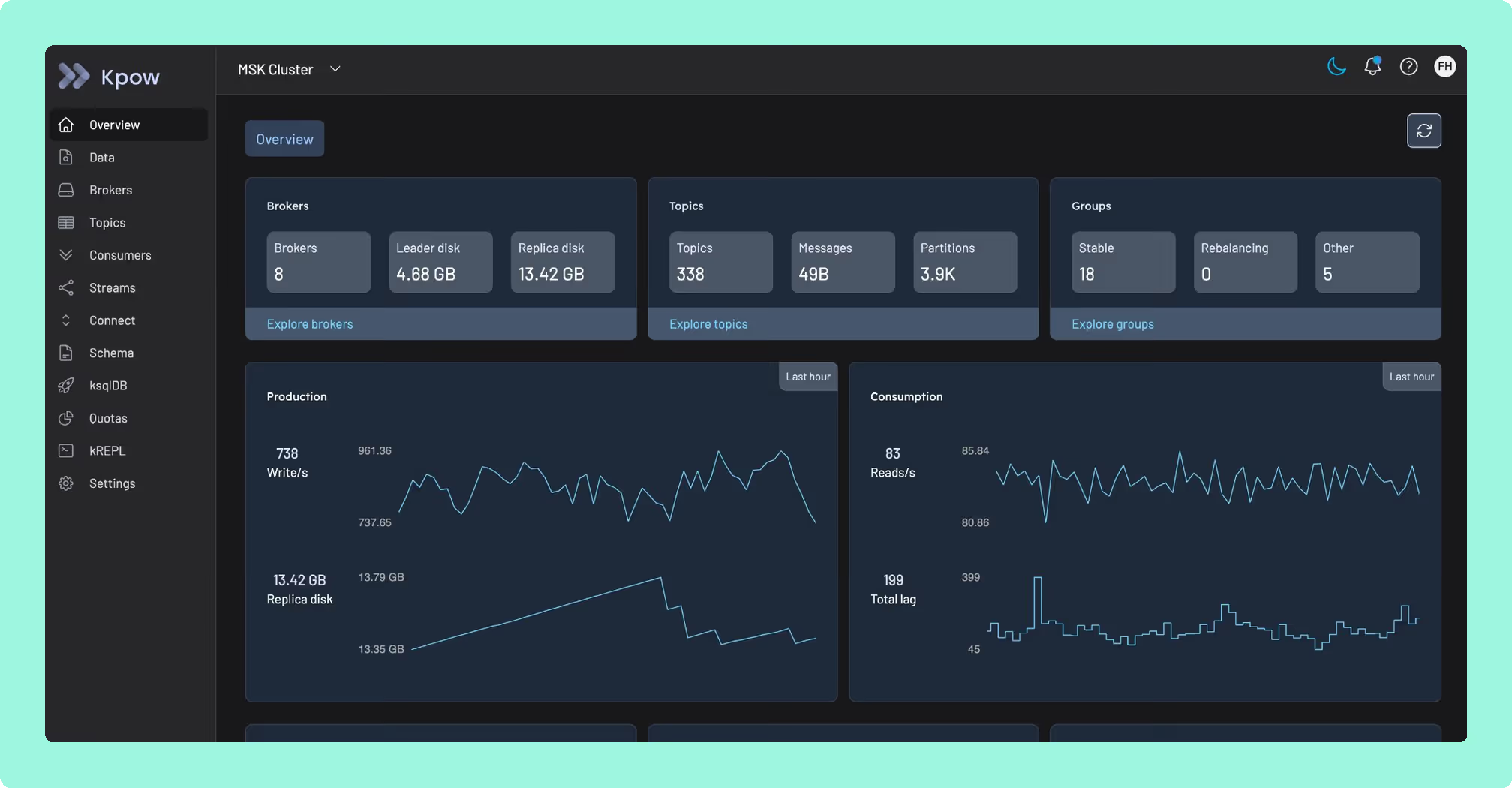
Lenses needs a control plane of its own before anyone opens a topic: a central HQ node on PostgreSQL, plus a separate Agent and Agent database for every cluster it reaches, and the meter still starts at 5 users and climbs to a negotiated contract past 15. Kafbat UI needs none of that infrastructure, but there is no vendor behind the free build either, so support is an unpriced services engagement rather than a number anyone can budget. Kpow by Factor House needs no second control plane and no negotiated contract: it is licensed per cluster at a published price, running as a single stateless JVM container configured through environment variables, with no external database, no sidecar and no persistent volume.
One container instead of a second control plane is the saving that matters here. Kpow’s product page lays out that per-cluster price in full: the third option, neither metered by user nor free and unsupported.
How these tools were scored
Every option is scored from 0 to 10 on each criterion, from the evidence and sources this page cites, and the reason for each score is on its card. Each criterion counts once, for a total out of 50. The options are listed by total.
Sources
- NVD record for CVE-2025-49127
- NVD record for CVE-2023-52251
- Apache Kafka documentation on authorization
- NVD record for CVE-2024-32030