At a glance
Kpow and Kafbat UI are scored here on the same five criteria, 50 points in all: Kpow 44 out of 50, Kafbat UI 38 out of 50. Kpow takes its best score on Access control and audit (10 out of 10) and its lowest on Cost as teams grow (7 out of 10). Cost a year: $13,500 licence for 3 clusters, plus $2,880 in ops. Kafbat UI takes its best score on Cost as teams grow (10 out of 10) and its lowest on Support and maintenance (5 out of 10). Cost a year: $0 licence, about $8,640 in operator time (this page's estimate).
Kpow vs Kafbat UI, compared
Kpow meets 6 of 8 requirements on this page.
Key takeaway
Both are web interfaces over a cluster somebody else is running, and the choice is not governance against none. Kafbat UI is free and Apache 2.0, with no cap on clusters or engineers, and it carries role-based access control, server-side masking and an audit log in the free product, though that log records modifications only until an operator turns on read auditing. What is bought is accountability: Kafbat publishes no support commitment. Kpow by Factor House starts at 4,500 US dollars per cluster per year, with 100 users included.
Kpow live demo
See Kpow in a working Kafka environment
You have seen how Kpow compares on paper. Open the live demo to test the workflows your platform team will depend on during an incident.
Built for platform and data teams managing shared Kafka clusters.
Try the Kpow demoWhat is Kafbat UI?
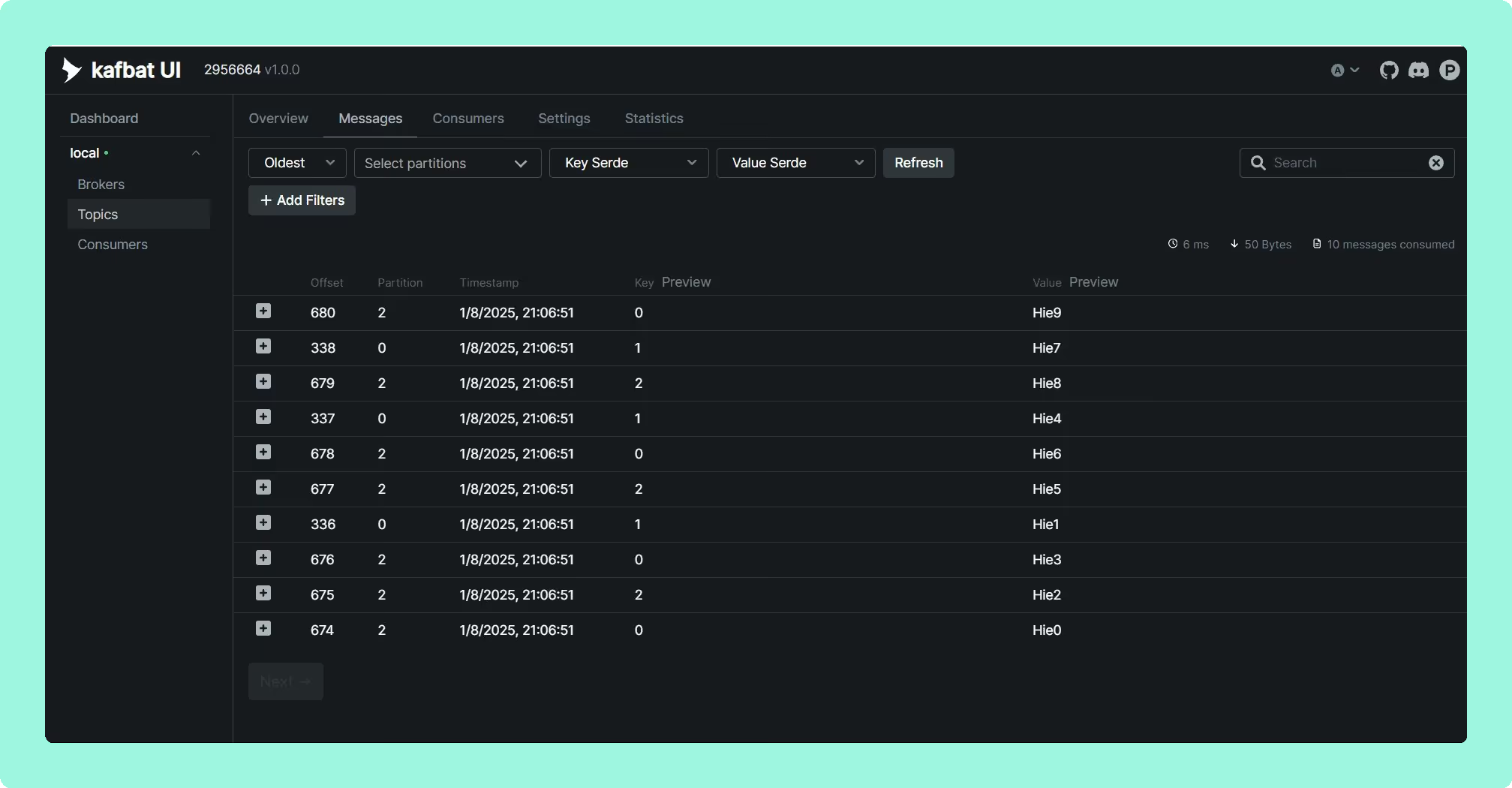
Kafbat UI is a free, open-source web dashboard for observing and managing Kafka clusters. It is Apache 2.0 licensed and deploys as a container rather than as an install per engineer, and there is no paid tier, no seat cap and no cluster cap on the software itself. It is the maintained continuation of the Provectus kafka-ui project, whose last release was v0.7.2 in April 2024 and whose last commit landed that July, and which still carries 12,200 stars against the fork’s audience.
- Access control: permissions scoped per resource type across eight resources, each with its own actions, and subjects matched by regular expression.
- Identity: OAuth including Google, GitHub and Cognito, plus LDAP and Active Directory.
- Masking: server-side
REMOVE,REPLACEandMASKpolicies on keys, values and named JSON fields. - Audit: a log written to a Kafka topic.
Releases run from v1.0.0 in March 2024 through v1.5.0 in April 2026.
What is Kpow?
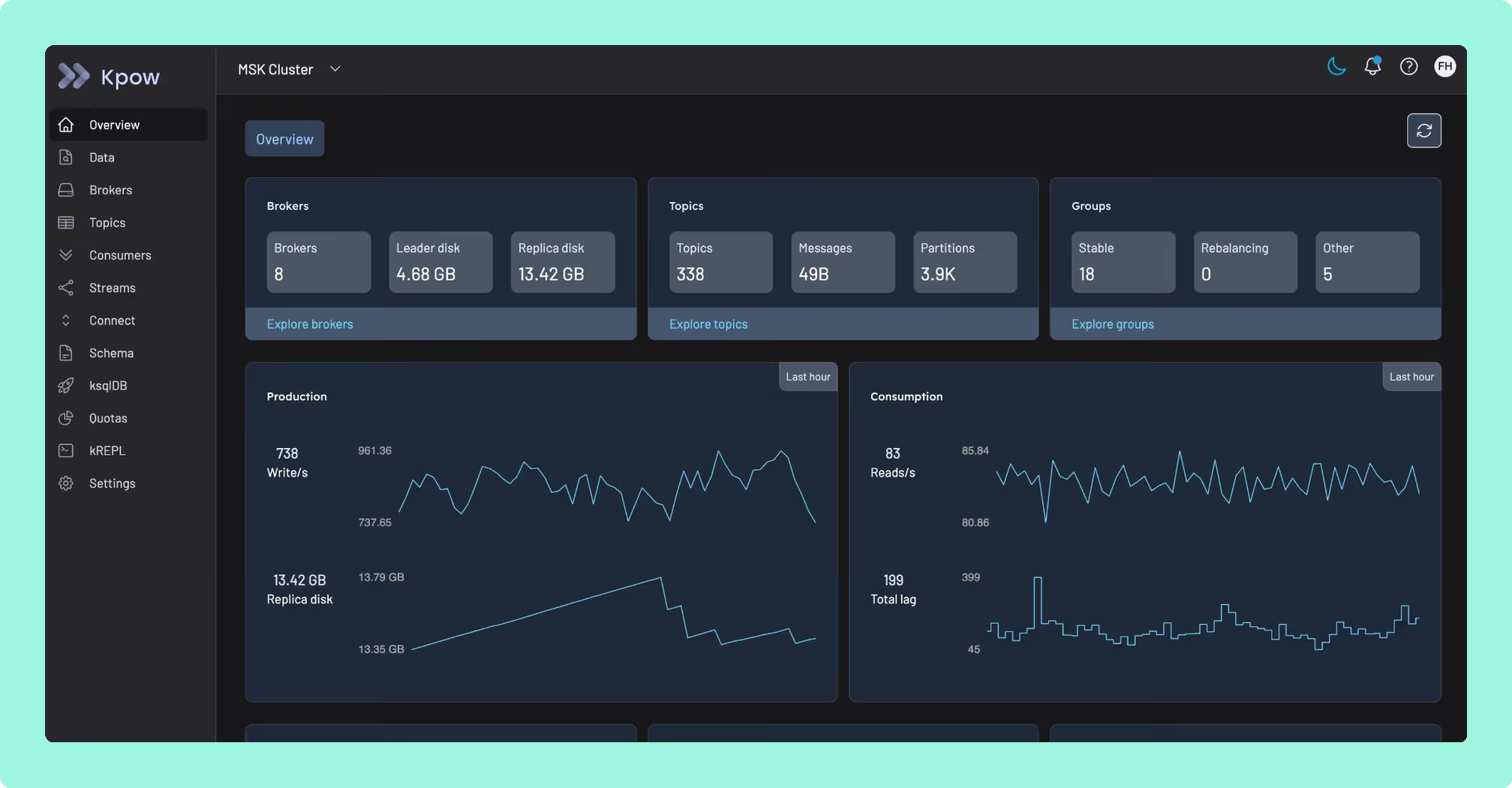
Kpow by Factor House is engineer-facing tooling for Apache Kafka. It runs against whatever cluster you already have: self-managed Kafka, Amazon MSK, Confluent Cloud, Redpanda, Aiven and Instaclustr, and it puts Kafka monitoring, data inspection and administration behind one interface.
What is the official 2026 pricing of Kpow and Kafbat UI?
Kafbat UI costs nothing to license and has no ceiling on clusters or engineers. The money in that model is a professional services engagement covering architecture review, custom implementation, performance and scaling work, security and 24/7 support, and no price is published for any of it. The software is therefore budgetable at zero, and supported use is not budgetable in advance at all.
Kpow Enterprise starts at 4,500 US dollars per cluster per year, with 100 users included, and adding an engineer does not change the bill. Kpow Community Edition is free for up to 3 clusters and 10 users, with simple user authentication and neither role-based access control nor single sign-on. The practical test has two halves: which of your two numbers is growing faster, the cluster count or the head count, and whether anybody outside your team ever has to be told who did what, and when. A team of four running two clusters under no compliance obligation is Kafbat’s case, and no pricing argument changes that.
Where does each one run out?
Each tool here is marked out of 10 on five criteria, 50 points in all, and no criterion is weighted above another. Nothing sits behind a multiplier, so a total is the sum of its five marks and a reader can recompute it. The five are cost as teams grow, deployment footprint, support and maintenance, access control and audit, and multi-cluster reach, because those are the questions a Kafka interface is actually measured against after the first month: a second cluster, an access review with a date on it, an upgrade nobody owns, and a bill that moves when the team does. The widest gap between the two marks is on support and maintenance, where Kpow marks 9 and Kafbat UI marks 5. The marks come from the same matrix used on every comparison on this site, so a tool scores the same here as it does anywhere else, and the reason behind each mark is in the card below, under Why these scores.
The dependency figures in the cards below were read on 24 September 2026 from each project’s published release artefact and matched against the NVD and GitHub advisory databases, so they move whenever a release or an advisory lands. Kpow is self-hosted as well. What a licence buys here is not a different deployment model, it is a company under contract to ship the patched build.
 Rank 1
 Kpow
44 out of 50 Total
Try Kpow in the live demo No signup needed.
- Cost a year
- $13,500 licence for 3 clusters, plus $2,880 in ops
- Support commitment
- Commercial support under the licence
- Licence
- Commercial, per cluster. Free Community Edition
- Cost as teams grow
- 7 out of 10
- Deployment footprint
- 9 out of 10
- Support and maintenance
- 9 out of 10
- Access control and audit
- 10 out of 10
- Multi-cluster reach
- 9 out of 10
Why these scores for Kpow
- Cost as teams grow 7 out of 10
- Published per cluster, Enterprise from $4,500 with 100 users, Community Edition free for 3 clusters and 10 users with RBAC, masking and audit held back. On this page, adding an engineer does not change the bill, and the free tier stops at 3 clusters and 10 users.
- Deployment footprint 9 out of 10
- One stateless container, environment variables, no database, sidecar or volume. This page adds that telemetry lives in internal Kafka topics on the cluster it already monitors, so there is no second system to run, back up or upgrade.
- Support and maintenance 9 out of 10
- Email support and an Enterprise support SLA, shipping continuously. On this page, commercial support comes under the licence rather than a separately negotiated engagement with no published price.
- Access control and audit 10 out of 10
- RBAC, SSO, server-side masking applied by role, and an audit log of user actions. This page records that masking policies are applied by role rather than a pattern somebody keeps current.
- Multi-cluster reach 9 out of 10
- Up to 12 clusters per instance across MSK, Confluent, Redpanda, Aiven and others, held at 9 by the per-instance cap. This page gives one estate mixed across MSK, Confluent Cloud, Redpanda and self-managed Kafka from one instance.
It is a single stateless JVM container, configured entirely through environment variables, with no external database, no sidecar and no persistent volume. Its telemetry lives in internal Kafka topics on the cluster it is already monitoring, so there is no second system to run, back up or upgrade, and one instance manages up to 12 clusters. It is licensed per cluster rather than per user, and the price is published: Kpow runs on top of a cluster somebody else is running, which is why the unit of the licence is the cluster and not the engineer.
Kpow is not a proxy either: nothing sits between producers and brokers, so nothing is enforced in the data path, and neither product’s role model reaches the broker’s own ACLs underneath it. Where Kpow’s free tier stops at 3 clusters and 10 users, the access control, masking and audit trail that come with the paid tiers are what a governed estate is usually buying.
Staying patched: the image built on 5 August 2026 bundles 311 libraries. The argument here is contractual accountability rather than speed.
What it costs a year: published, plus the cost of running it. Enterprise is 4,500 US dollars per cluster a year with 100 users included, so dev, staging and production are 13,500, and this page’s estimate for one stateless container is two engineer-hours a month at 120 US dollars an hour, 2,880 a year, which is 16,380 all in. Neither side moves with headcount: twenty engineers and a hundred cost the same on both, because neither ladder meters seats. The 7,740 between them buys a support commitment with a price on it, and masking applied by role rather than by a pattern somebody has to keep current.
Compare Kpow vs AKHQKpow vs Kafdrop
 Rank 2
 Kafbat UI
38 out of 50 Total
- Cost a year
- $0 licence, about $8,640 in operator time (this page's estimate)
- Support commitment
- None published. Services negotiated separately
- Licence
- Apache 2.0. No seat cap and no cluster cap
- Cost as teams grow
- 10 out of 10
- Deployment footprint
- 8 out of 10
- Support and maintenance
- 5 out of 10
- Access control and audit
- 6 out of 10
- Multi-cluster reach
- 9 out of 10
Why these scores for Kafbat UI
- Cost as teams grow 10 out of 10
- Apache 2.0, no seat or cluster cap, nothing held back. On this page, it is free to licence with no ceiling on clusters or engineers, and the money sits in unpriced professional services instead.
- Deployment footprint 8 out of 10
- A stateless container with a published Helm chart, docked for the mounted volume the configuration wizard needs. This page adds that anything created through the wizard is written inside the container and survives a restart only on a mounted volume.
- Support and maintenance 5 out of 10
- It shipped v1.5.0 April 2026 with commits landing August 2026, against GitHub issues or unpriced professional services with no SLA, and the project publishes no support commitment of its own.
- Access control and audit 6 out of 10
- Roles per resource type, six identity provider types, server-side masking and audit to a Kafka topic, docked because there is no per-role masking override. On this page, governance is operator-authored and pattern-driven, and the audit level records modifications only until read auditing is turned on.
- Multi-cluster reach 9 out of 10
- Another cluster is another configuration entry, with no cap. This page gives no cluster cap on the software itself.
Kafbat’s limits are operational rather than featural. The project publishes no support commitment of its own: response times, escalation and fixes come from a services engagement negotiated separately. Governance is operator-authored and pattern-driven, so masking and access coverage is whatever somebody wrote and keeps maintaining as topics are added. RBAC for Kafka is never a switch, and here the authorship and the upkeep are yours.
Audit level: modifications only, so who read something is not recorded until an operator turns read auditing on.
Audit topic: defaults to a single partition, and must not be compacted, because the records carry no key.
Masking coverage: only as complete as the patterns written for it.
Dynamic config: anything created through the wizard is written inside the container and survives a restart only on a mounted volume.
Staying patched: v1.5.0 shipped in April 2026 and nothing has shipped since. In the 157 days after it, at least 20 high or critical advisories were published against libraries that release bundles, including a critical in netty. Only 150 of its 266 bundled jars resolve to a Maven coordinate, so that is a floor rather than a total, and the state of the release itself is unmeasured. Kafbat does publish a security policy, which AKHQ and Kafdrop do not.
What it costs a year: nothing to licence, with no cap on clusters or engineers, so the spend is operator time. This page’s estimate rather than a vendor price: six engineer-hours a month at 120 US dollars an hour, 8,640 a year, covering the container, the masking patterns as topics are added, the single-partition audit topic and the release line you inherit. It is the lower of the two numbers on this page at any team size. What it does not include is a support commitment, because supported use is a separate professional services engagement with no published price, so the part of the bill that matters most here cannot be budgeted in advance at all.
Compare Kafbat UI reviewAKHQ vs Kafbat UIKadeck vs Kafbat UI
How do you switch, or run both?
Running both is reasonable, and it costs a container and a configuration block rather than a migration, because neither tool owns cluster state. Kafbat holds no state on the brokers, so removing it changes nothing on the cluster, and declaring clusters in YAML or environment variables under source control avoids the one wizard exception entirely. Kpow is a container as well, and its telemetry lives in Kafka topics on the monitored cluster, so removing it leaves nothing behind to migrate. Coming from the Provectus project, moving to Kafbat is a change of maintainer rather than a change of tool.
Which should you pick?
Kpow by Factor House is the pick where somebody has to be accountable when the tool is wrong, scoring 44 against Kafbat UI’s 38: support comes with the licence rather than a separate negotiation, and masking is applied by role rather than by a pattern somebody maintains. Kafbat UI scores 10 on cost against Kpow’s 7, and is the better choice for a small team with no audit requirement.
Pick Kafbat UI if:
- the team is small and the cluster count is low
- nobody outside the team needs an audit answer on demand
- somebody genuinely enjoys owning the configuration
Pick Kpow if:
- somebody has to be accountable when the tool is wrong
- role-based access is wanted without a per-user bill
- the estate is mixed across MSK, Confluent Cloud, Redpanda and self-managed Kafka
- a price you can read before talking to anybody is part of the requirement
Pick neither if the requirement is written as policy enforced in the data path: that is a proxy, and a different interface on top of the cluster does not deliver it. These two are also not the whole field, and AKHQ, Redpanda Console and Conduktor sit in the same category.
If the shortlist is wider than these two, the best free Kafka UI tools sets out what each free tier holds back, and Kafka audit logging tools covers which of them records a read rather than only a change.
We talked about my experience in the UK finance software sector, and what 'Enterprise' developers need in order to focus on shipping work that adds value to their team and business rather than fighting otherwise fantastic open-source software.
Derek Troy-West, Co-founder and CEO of Factor House
Who is on the hook?
Kafbat UI carries real governance for a free product: role-based access control scoped per resource across eight resource types, with subjects matched by regular expression, server-side REMOVE, REPLACE and MASK policies on keys, values and named JSON fields, and an audit log written to a Kafka topic. It is also the maintained continuation of Provectus’s kafka-ui, still carrying 12,200 stars against the fork’s own audience.
Still, what Kafbat doesn’t carry is a guarantee. There is no support commitment behind any of it: response times, escalation and fixes all come from a services engagement negotiated separately, with no price attached. Masking coverage is only as complete as the patterns someone wrote and keeps maintaining as topics get added, and dynamic configuration created through the setup wizard lives inside the container, surviving a restart only if somebody mounted a volume for it. Kpow answers each of those directly: commercial support comes with the licence rather than a separate negotiation, data masking policies are applied by role instead of a pattern somebody has to keep current, and the whole deployment is one stateless container configured through environment variables, with no database, sidecar or volume to remember to mount.
It also reaches up to 12 clusters from one instance, and the price is published rather than negotiated: Enterprise starts at 4,500 US dollars per cluster with 100 users included, and adding an engineer doesn’t move that number. Start on Kpow and see whether it answers that ticket before you buy anything. Kafbat can show you what happened, once somebody builds a reader for it. Kpow tells you who’s on the hook before you have to ask.
How these tools were scored
Every option is scored from 0 to 10 on each criterion, from the evidence and sources this page cites, and the reason for each score is on its card. Each criterion counts once, for a total out of 50. This page is published by Factor House, which makes Kpow. Every option is scored on the same rubric and the same sources: Kpow's per-criterion scores are set the same way as every other option's and are not adjusted, and the weights apply to every option alike. Kpow ranks first on its total of 44 out of 50. The other options follow by total.