At a glance
Kafbat UI and Redpanda Console are scored here on the same five criteria, 50 points in all: Kafbat UI 38 out of 50, Redpanda Console 29 out of 50. Kafbat UI takes its best score on Cost as teams grow (10 out of 10) and its lowest on Support and maintenance (5 out of 10). Cost a year: $0 licence, about $8,640 in operator time (this page's estimate). Redpanda Console takes its best score on Deployment footprint (8 out of 10) and its lowest on Multi-cluster reach (2 out of 10). Cost a year: $0 licence, about $8,640 in ops, plus an unpublished licence.
Kafbat UI vs Redpanda Console, compared
Kpow meets 6 of 8 requirements on this page.
Key takeaway
Kafbat UI and Redpanda Console are both web interfaces over a Kafka cluster somebody else runs, both free to start and deployed as a container, so neither list nor price separates them. Kafbat UI is Apache 2.0 with nothing held back, shipping role-based access control across eight resource types free. Redpanda Console is source-available under the Business Source License with a paid tier: RBAC and SSO need a Redpanda Enterprise licence, the broker vendor’s platform licence, and it reaches one cluster per instance with no built-in metrics. Kpow by Factor House is licensed per cluster at a published price.
Kpow live demo
Test the trade-offs in a live Kafka UI
You have compared Kafbat UI vs Redpanda Console. Open a live Kpow environment to test the everyday workflows a shared Kafka platform needs.
Built for platform and data teams managing shared Kafka clusters.
Try the Kpow demoWhat is Kafbat UI?
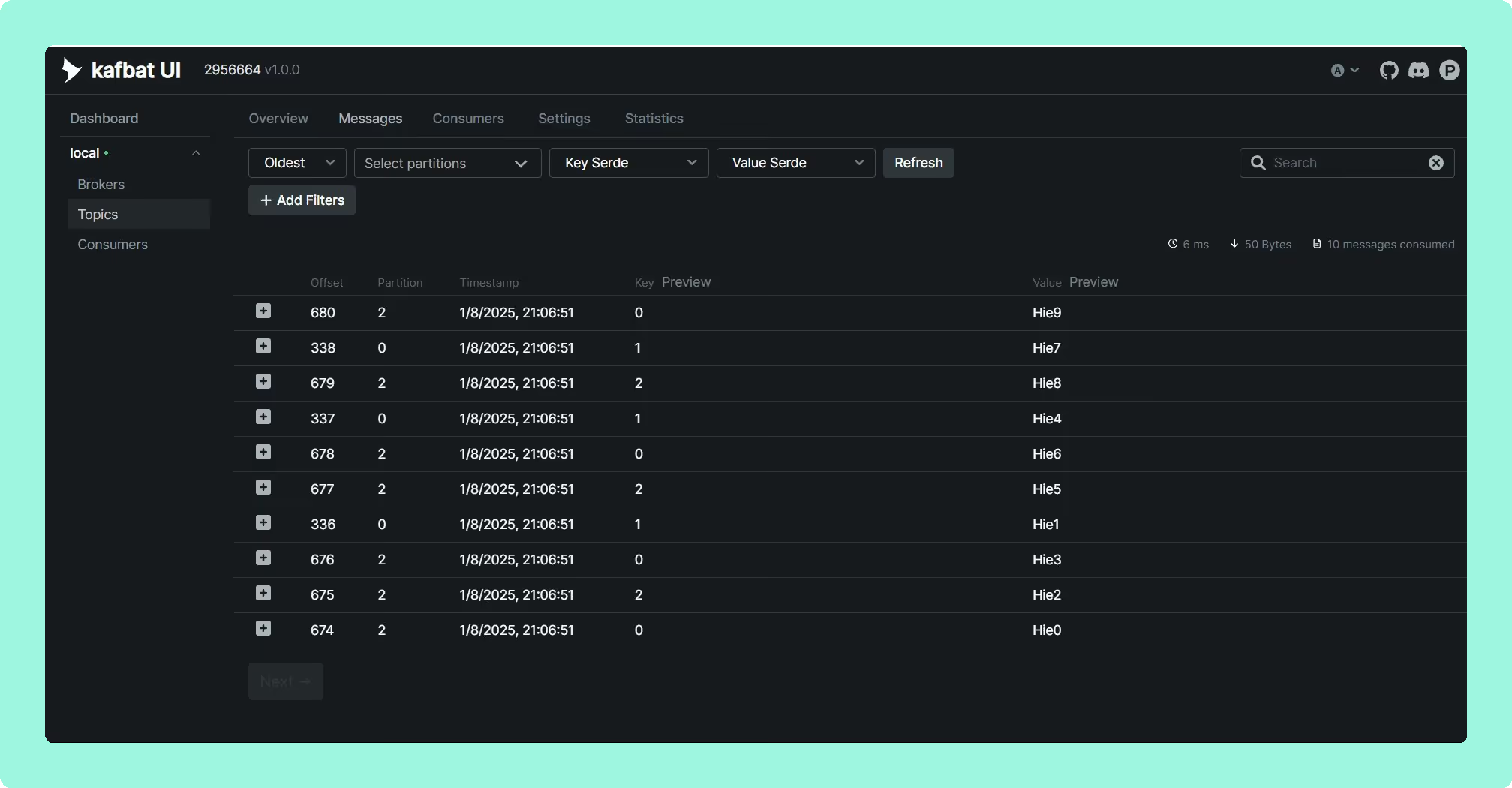
Kafbat UI is a free, open-source web dashboard for observing and managing Apache Kafka clusters, deployed as a container. It is Apache 2.0 licensed, with no source-available restriction on production use, and it is the maintained continuation of the Provectus kafka-ui project, carried on by contributors from that project’s inception.
The fork history is why the two names collide in search. Provectus kafka-ui shipped its last release, v0.7.2, in April 2024 and took its last commit that July. Kafbat is where the work went. The awkward consequence is audience: the dormant repository carries 12,200 stars against Kafbat’s 2,642, so the first result many engineers reach is the abandoned one, and aggregator listings still rank the two lineages as separate projects with the dormant one first. The company behind the fork sells professional services rather than a paid edition.
What is Redpanda Console?
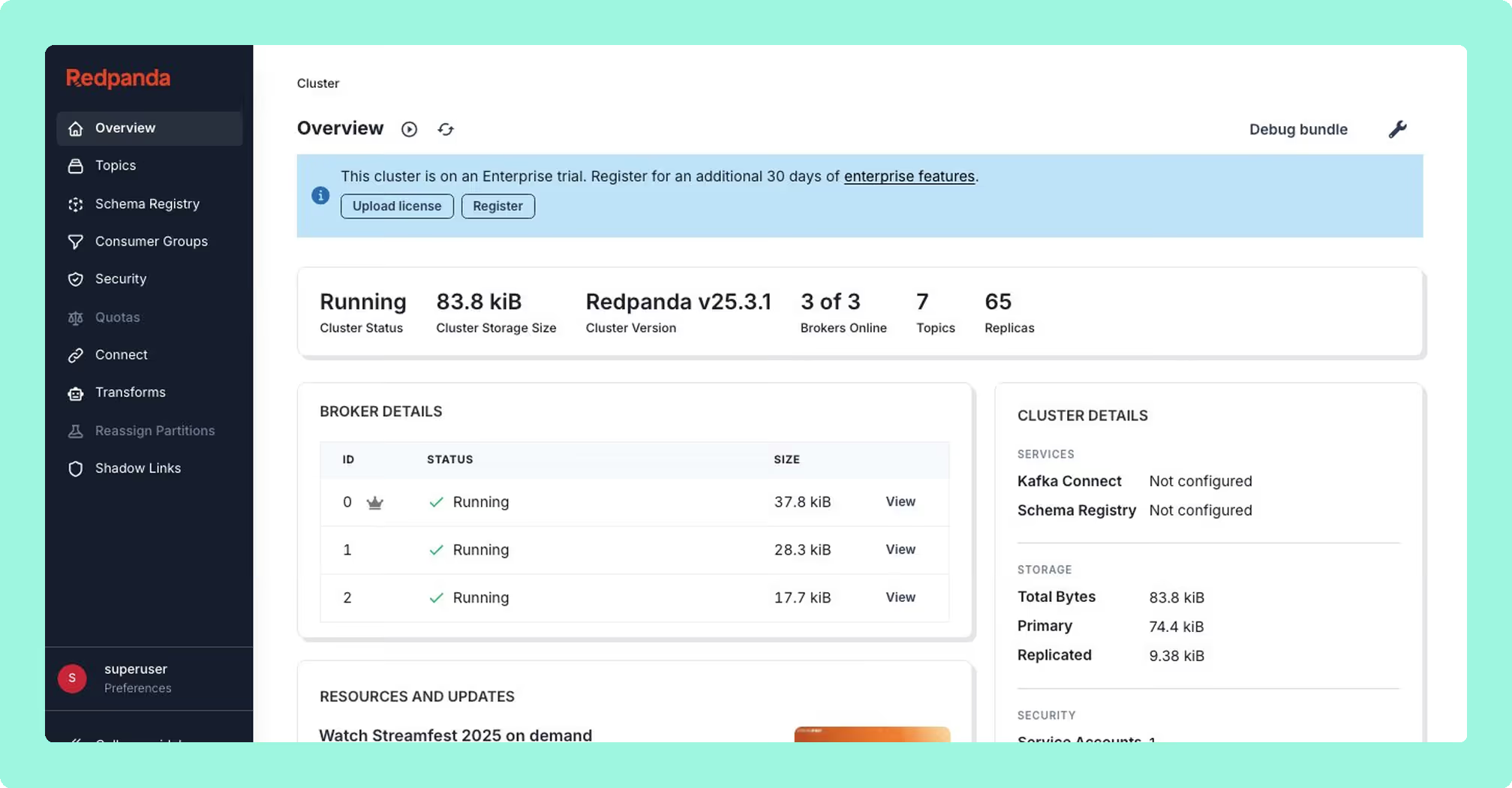
Redpanda Console is a source-available web UI for inspecting and managing Kafka-compatible clusters, built in Go and React and distributed as a Docker image and a Helm chart. It started as Kowl, by CloudHut, and Redpanda acquired it in April 2022. It serves Redpanda clusters, where it integrates with the Redpanda admin API, and it also serves vanilla Apache Kafka, Amazon MSK and Confluent Platform.
The licence is what makes it a different kind of product. Two licences run in parallel: the Business Source License covers the non-enterprise code and converts to Apache 2.0 at a change date, and a separate Redpanda Community License covers the paid enterprise features. That is source-available rather than open source, and third parties routinely label it OSS. In practice it is a viewer and a debugging surface first and an operational platform second, and its message browser is the strongest part of the product.
What is the official 2026 pricing of Kafbat UI and Redpanda Console?
Kafbat UI is Apache 2.0 with no paid tier, no seat cap and no cluster cap, and nothing is held back from the open release. Redpanda Console’s community edition is free indefinitely under the Business Source License, covering the message viewer, topic and consumer group management, Kafka Connect management and Schema Registry browsing. Both are free at the door, and that is where the similarity ends.
What money buys differs. On Kafbat there is nothing to buy inside the product: the money is in professional services around the software, quoted rather than listed. On Console the money buys the governance layer, under a Redpanda Enterprise licence, which is the broker vendor’s platform licence. Both tools read the broker’s own ACLs, which Kafka enforces whichever interface sits in front of it; what one of them charges for is the access model over the interface itself. So a team on Amazon MSK, Confluent Platform or vanilla Apache Kafka that wants role-based access control in its Kafka UI is buying a broker vendor’s enterprise licence without running that broker. Kafbat manages several clusters from one interface; Console does not, so dev, staging and production is three instances, and Console also needs an external Schema Registry beside it.
Where does each one run out?
Each tool here is marked out of 10 on five criteria, 50 points in all, and no criterion is weighted above another. Nothing sits behind a multiplier, so a total is the sum of its five marks and a reader can recompute it. The five are cost as teams grow, deployment footprint, support and maintenance, access control and audit, and multi-cluster reach, because those are the questions a Kafka interface is actually measured against after the first month: a second cluster, an access review with a date on it, an upgrade nobody owns, and a bill that moves when the team does. The widest gap between the two marks is on multi-cluster reach, where Kafbat UI marks 9 and Redpanda Console marks 2. The marks come from the same matrix used on every comparison on this site, so a tool scores the same here as it does anywhere else, and the reason behind each mark is in the card below, under Why these scores.
The dependency figures in the cards below were read on 24 September 2026 from each project’s published release artefact and matched against the NVD and GitHub advisory databases, so they move whenever a release or an advisory lands. Self-hosting is not the risk on this page. Both run in your own infrastructure. The question is who rebuilds the image when a dependency advisory lands.
 Rank 1
 Kafbat UI
38 out of 50 Total
- Cost a year
- $0 licence, about $8,640 in operator time (this page's estimate)
- Access control
- Free, eight resource types with regex subjects
- Release record
- v1.5.0, 20 April 2026
- Cost as teams grow
- 10 out of 10
- Deployment footprint
- 8 out of 10
- Support and maintenance
- 5 out of 10
- Access control and audit
- 6 out of 10
- Multi-cluster reach
- 9 out of 10
Why these scores for Kafbat UI
- Cost as teams grow 10 out of 10
- Apache 2.0 with no paid tier, no seat cap and no cluster cap, and nothing held back from the open release.
- Deployment footprint 8 out of 10
- A stateless container with a published Helm chart, docked because the configuration wizard writes inside the container and overwrites the file in full, so UI changes are lost on restart without a volume.
- Support and maintenance 5 out of 10
- It shipped v1.5.0 on 20 April 2026 and none since, against commits still landing in August 2026, with nobody selling a paid edition and support quoted rather than listed.
- Access control and audit 6 out of 10
- Role-based access control across eight resource types and single sign-on over six identity provider types, both in the free release, docked because the audit level defaults to ALTER_ONLY so who looked at something is not captured until an operator sets ALL. It ties Redpanda Console on capability; that Console charges for the same layer lands in the cost bar.
- Multi-cluster reach 9 out of 10
- One interface covers several clusters, against one cluster per instance on the other side.
Kafbat’s audit log is real, and its defaults undo half of it. The level switch defaults to ALTER_ONLY, so who changed something is captured and who looked at it is not, until an operator sets ALL. Three published unauthenticated remote-code-execution CVEs sit across the two lineages, scored 8.9, 8.8 and 8.1, and every one is remedied by an upgrade somebody on the operator’s side performs.
Audit topic: must not be compacted, because records carry no key, and its partition count defaults to 1.
Releases: five across 2025, then v1.5.0 on 20 April 2026 and none since, against commits still landing in August 2026.
Dynamic config: the wizard writes inside the container and overwrites the file in full, so UI changes are lost on restart without a volume.
Metrics: no stored time series. The request for graphed lag and publish counts has been open since March 2024.
Staying patched: v1.5.0 shipped in April 2026 and nothing has shipped since. In the 157 days after it, at least 20 high or critical advisories were published against libraries that release bundles, including a critical in netty. Only 150 of its 266 bundled jars resolve to a Maven coordinate, so that is a floor rather than a total, and the state of the release itself is unmeasured. Kafbat does publish a security policy, which AKHQ and Kafdrop do not.
What it costs a year: nothing to licence, and nothing gated behind a broker vendor’s platform licence. This page’s estimate rather than a vendor price: on twenty engineers and three clusters, six engineer-hours a month covering the container, the release line, CVE response and raising the audit level off ALTER_ONLY is 8,640 US dollars a year at 120 US dollars an hour. A Kpow licence on the same three clusters is 13,500 US dollars a year at its published 4,500 per cluster.
 Rank 2
 Redpanda Console
redpanda.com
29 out of 50 Total
- Cost a year
- $0 licence, about $8,640 in ops, plus an unpublished licence
- Access control
- Requires a Redpanda Enterprise licence
- Release record
- v3.11.0, 25 August 2026
- Cost as teams grow
- 6 out of 10
- Deployment footprint
- 8 out of 10
- Support and maintenance
- 7 out of 10
- Access control and audit
- 6 out of 10
- Multi-cluster reach
- 2 out of 10
Why these scores for Redpanda Console
- Cost as teams grow 6 out of 10
- Free indefinitely under the Business Source License with no seat count, docked because RBAC and SSO need a Redpanda Enterprise licence, the broker vendor’s platform licence, which a team not running a Redpanda broker still has to buy.
- Deployment footprint 8 out of 10
- A Docker image and a Helm chart holding no state, with an external Schema Registry needed beside it.
- Support and maintenance 7 out of 10
- Redpanda Console shipped v3.11.0 on 25 August 2026 after v3.10.0 on 10 August and v3.9.0 on 23 July, with a 2.8.x maintenance line alongside it and Redpanda under contract where licensed.
- Access control and audit 6 out of 10
- RBAC and identity-provider single sign-on are both present but enterprise-gated and absent from the free tier, and where Console has enterprise features enabled and cannot find a valid licence it redirects to a licence-expiration page and restricts all other access.
- Multi-cluster reach 2 out of 10
- One cluster per instance. Broker-tier multi-cluster was requested in September 2021 and closed, and again in April 2022, and that second request is still open, so dev, staging and production is three instances.
Console’s limits start at the licence. Role-based access control and identity-provider single sign-on both require an enterprise licence, and the consequence is sharper than the gate: where Console has enterprise features enabled and cannot find a valid licence, it redirects to a licence-expiration page and restricts all other access, and one already expired at startup prints an error and exits.
SSO scope: Console SSO spans Enterprise Self-Managed, BYOC and Dedicated, while OIDC for the Kafka, HTTP Proxy, Admin and Schema Registry APIs is Self-Managed only.
Timeouts: six seconds for DescribeLogDirs and Metadata, five for DescribeConfigs and thirty-five for ListMessages, none exposed in the reference configuration.
Degradation: one broker offline in a multi-node cluster fails every consumer-group query with a shard error.
Scope: no built-in broker metrics, no alerting, no historical trends, no request quotas, no partition rebalancing, and no producing a message.
What it costs a year: nothing to licence under the Business Source License, and nothing published for the governance layer. This page’s estimate rather than a vendor price: one instance per environment, so three deployments and an external Schema Registry beside them, at six engineer-hours a month is 8,640 US dollars a year at 120 US dollars an hour for a team of twenty. Role-based access and single sign-on then sit on top, behind a Redpanda Enterprise licence with no published price. A Kpow licence on the same three clusters is 13,500 US dollars a year at its published 4,500 per cluster, with access control included.
Compare Kpow vs Redpanda ConsoleKafdrop vs Redpanda ConsoleRedpanda Console review
Which should you pick?
Kafbat UI scores 38 against Redpanda Console’s 29 and is the pick for a team on vanilla Apache Kafka, because Console’s RBAC and SSO need a Redpanda Enterprise licence from the broker vendor and it reaches one cluster per instance. Console is source-available under the Business Source License rather than open source. A team that wants governance under contract should shortlist Kpow by Factor House, published per cluster.
Pick Kafbat UI if:
- the access model is the project, on a shared cluster or across several teams
- role-based access, single sign-on and an audit trail have to exist without a licence conversation
- the audit trail should go into Kafka itself rather than a second datastore
Pick Redpanda Console if:
- the job is debugging and the cluster is already governed somewhere else
- inspection must not join a consumer group or move committed offsets
- Protobuf has to decode from local descriptor maps with no registry involved
On Kafbat, set level: ALL on day one, raise the audit topic’s partition count before anybody notices it, and pin the image to the Kafbat lineage rather than the Provectus one. On Console, budget one instance per environment and a Prometheus and Grafana stack beside them. These two are not really competing for the same slot: the question is where governance is going to live, in the tool or in a broker vendor’s licence.
Kafka SSO tools ranks which products put single sign-on in the free tier rather than behind a licence, and the best free Kafka UI tools sets out what each free edition includes.
Kpow: governance that answers to the cluster
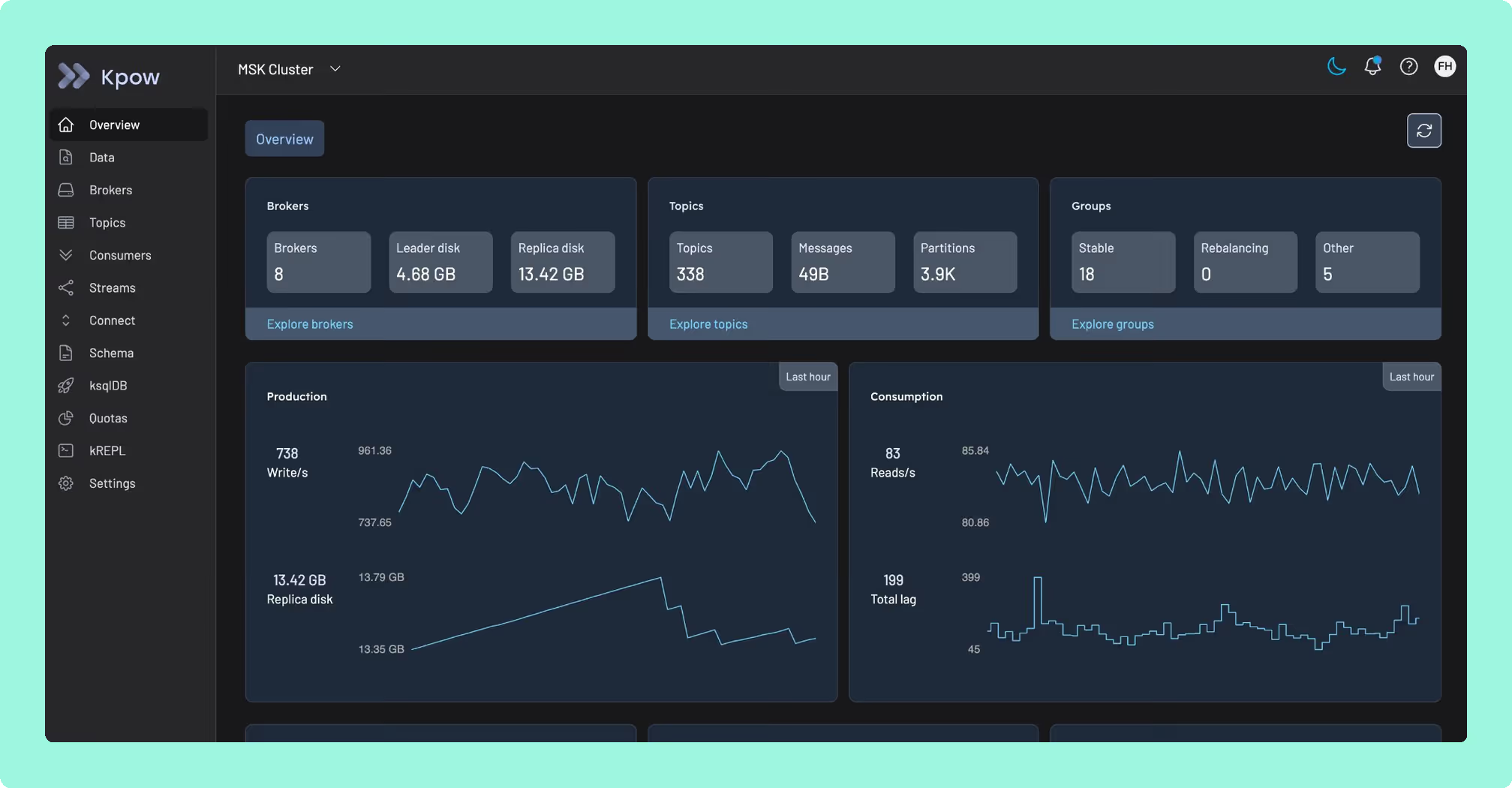
Both of these tie governance to something other than the cluster you are actually running. Kafbat UI ships governance features free, but there is no vendor behind them if something goes wrong: support is a quoted professional-services engagement rather than a subscription, and the level switch controlling the audit log defaults to ALTER_ONLY until an operator raises it by hand. Redpanda Console ties governance to a different outside party: SSO and interface RBAC require a Redpanda Enterprise licence, the broker vendor’s own platform licence, whether or not you run a Redpanda broker at all. Kpow by Factor House attaches governance to the cluster itself: it is licensed per cluster at a published price, so adding an engineer does not move the number, and it runs as a single stateless JVM container configured through environment variables, with no external database and no sidecar.
That per-cluster price sits in full on Kpow’s product page, attached to the cluster rather than to either vendor’s own terms.
How these tools were scored
Every option is scored from 0 to 10 on each criterion, from the evidence and sources this page cites, and the reason for each score is on its card. Each criterion counts once, for a total out of 50. The options are listed by total.
Sources
- Apache Kafka documentation on authorization
- Apache Kafka documentation on consumer groups
- Apache Kafka documentation on log compaction
- NVD record for CVE-2025-49127
- NVD record for CVE-2023-52251
- NVD record for CVE-2024-32030
- Business Source License 1.1