At a glance
Kadeck and Confluent Control Center are scored here on the same five criteria, 50 points in all: Kadeck 29 out of 50, Confluent Control Center 20 out of 50. Kadeck takes its best score on Multi-cluster reach (9 out of 10) and its lowest on Cost as teams grow (4 out of 10). Cost a year, 10 engineers: 3,840 on Enterprise published, plus 2,880 this page's estimate. Confluent Control Center takes its best score on Access control and audit (7 out of 10) and its lowest on Cost as teams grow (2 out of 10). Cost a year, 10 engineers: About 4,680 US dollars to operate, this page's estimate; licence not published.
Confluent Control Center vs Kadeck, compared
Kpow meets 6 of 7 requirements on this page. One row is not a yes or no question.
Key takeaway
Control Center is not sold on its own: it arrives bundled with a Confluent Platform enterprise licence, and it needs the Confluent Metrics Reporter in the broker classpath, so it cannot watch Amazon MSK, Redpanda or Aiven. For a team on any of those, the comparison ends there. Kadeck publishes a ladder instead: Professional at 19 US dollars per user per month, and Enterprise at 32 with a ten-user minimum, where its governance features sit. Kpow by Factor House is licensed per cluster at a published price.
Kpow live demo
Test the trade-offs in a live Kafka UI
You have compared Confluent Control Center vs Kadeck. Open a live Kpow environment to test the everyday workflows a shared Kafka platform needs.
Built for platform and data teams managing shared Kafka clusters.
Try the Kpow demoWhat is Confluent Control Center?
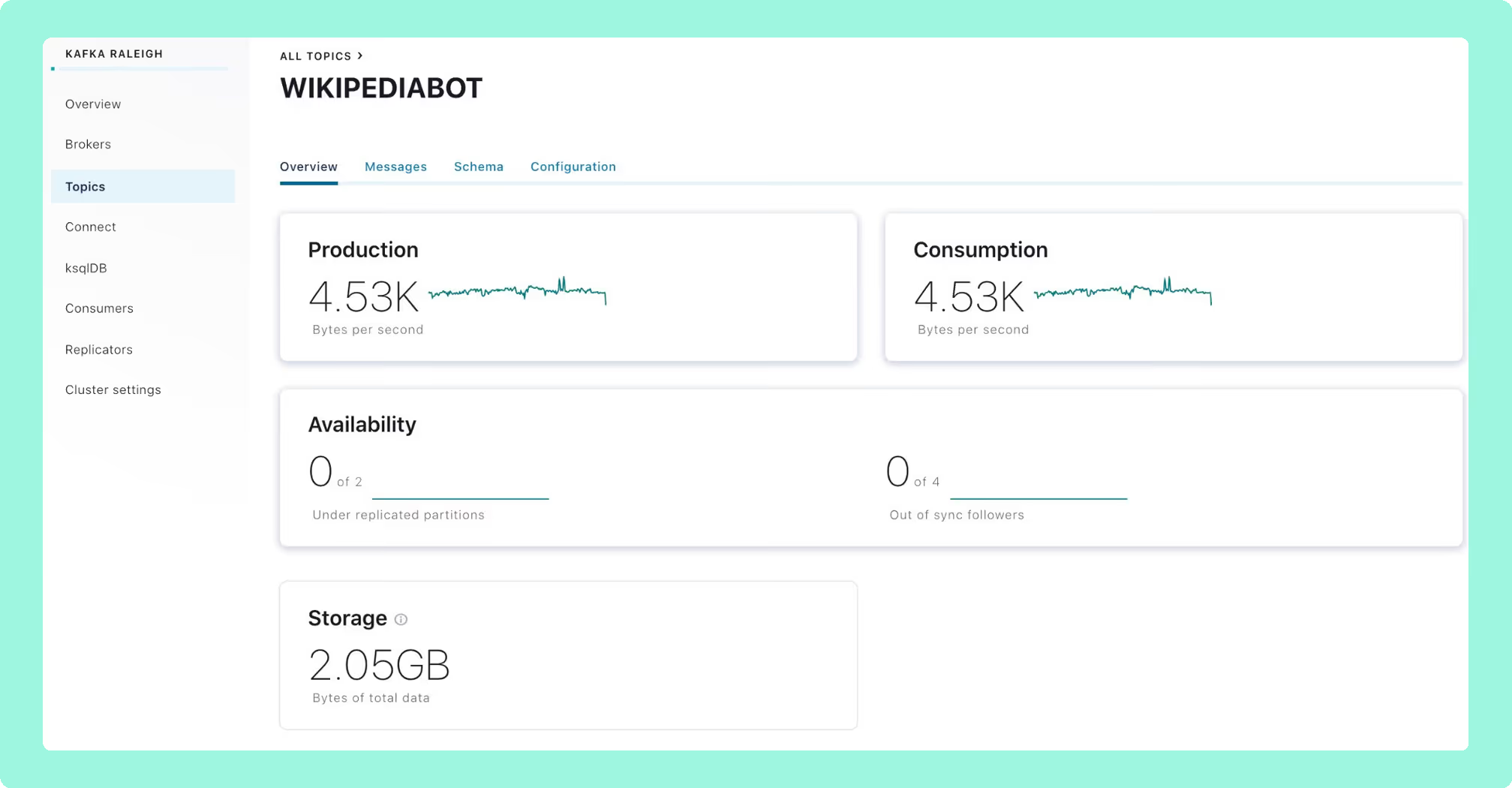
Confluent Control Center is the web management and monitoring interface bundled with Confluent Platform, Confluent’s commercial Kafka distribution. It is closed source, it arrives under an enterprise licence, and it is not sold on its own. One dashboard covers brokers, topics, consumer groups, Kafka Connect workers, Schema Registry, ksqlDB and Kafka Streams topologies. It needs the proprietary Confluent Metrics Reporter in the broker classpath, which is a broker-side change to every broker you want it to see.
- Legacy architecture: shipped with Confluent Platform 7.x and earlier, running metrics through a Kafka Streams pipeline.
- Next generation: Prometheus-based, generally available May 2025 as Control Center 2.0.0, with Confluent Platform 8.0 support in 2.2.x.
- What changed: startup fell from 15 to 50 minutes to about one, and supported partition scale rose from 120,000 to 400,000.
- Current line: 2.6.x, requiring Java 17.
IBM completed its acquisition of Confluent in March 2026, which is worth knowing before a multi-year platform licence is signed.
What is Kadeck?
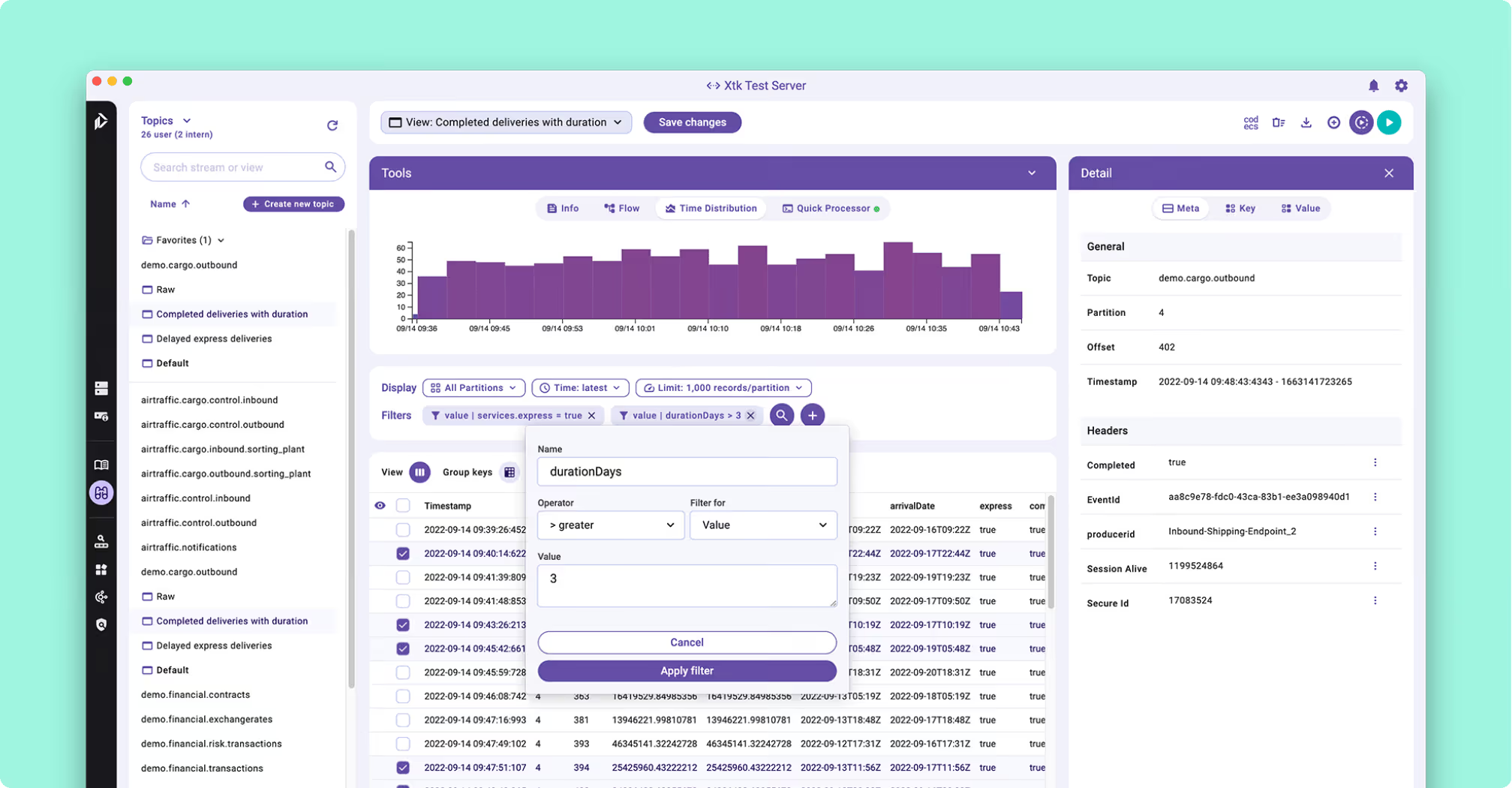
Kadeck is a commercially licensed Kafka management and data exploration tool from xeotek. It is not open source, and it comes as two product lines rather than two rungs of one ladder: a native desktop application for Linux, macOS and Windows, and a web and Teams edition distributed as a Docker image. Its data sources are Apache Kafka, Redpanda and Amazon Kinesis, so it does not care who runs the cluster.
- Record view: Avro decoded through Schema Registry and laid out in columns rather than raw bytes.
- Quick Processor: a JavaScript expression derives calculated fields, with no streaming application behind it.
- Recovery: dead letter queue recovery as a documented workflow: isolate, transform inline, preview, re-ingest, purge.
- Metadata layer: schema fields documented externally, without bumping a schema version.
What is the official 2026 pricing of Confluent Control Center and Kadeck?
Control Center is not sold on its own. It arrives with a Confluent Platform enterprise licence, and the figure on that licence comes out of a sales conversation. Control Center, multi-tenancy support and encryption each carry cost above the base licence. That enterprise licence includes quarterly patch updates for the current version only, and the Platinum support tier is not available for this product.
Kadeck publishes a ladder. Professional is 19 US dollars per user per month with a one-user minimum and unlimited clusters, and it is the Desktop line. Enterprise is 32 US dollars per user per month with a ten-user minimum, and that minimum is a floor rather than a rate: a team of four pays 3,840 US dollars a year, the same as a team of ten, and a hundred engineers pay 38,400. Kadeck’s answers to headcount. Control Center’s does not move at all, but its unit is a platform licence, and a team of five is unlikely to buy a Kafka distribution to get a console. That is also why a team weighing free Kafka UI tools is already outside the Confluent Platform question.
Where does each one run out?
Both are scored out of 50, as five criteria marked out of 10, and each criterion carries the same weight as the others. Nothing sits behind a multiplier, so a total is the sum of its five marks and a reader can recompute it. The five are cost as teams grow, deployment footprint, support and maintenance, access control and audit, and multi-cluster reach, because those are the questions a Kafka interface is actually measured against after the first month: a second cluster, an access review with a date on it, an upgrade nobody owns, and a bill that moves when the team does. The widest gap between the two marks is on multi-cluster reach, where Confluent Control Center marks 3 and Kadeck marks 9. The marks come from the same matrix used on every comparison on this site, so a tool scores the same here as it does anywhere else, and the reason behind each mark is in the card below, under Why these scores.
 Rank 1
 Kadeck
kadeck.com
29 out of 50 Total
- Cost a year, 10 engineers
- 3,840 on Enterprise published, plus 2,880 this page's estimate
- Governance floor
- Ten users, 3,840 US dollars a year
- Clusters it watches
- Kafka, Redpanda, Amazon Kinesis
- Cost as teams grow
- 4 out of 10
- Deployment footprint
- 4 out of 10
- Support and maintenance
- 6 out of 10
- Access control and audit
- 6 out of 10
- Multi-cluster reach
- 9 out of 10
Why these scores for Kadeck
- Cost as teams grow 4 out of 10
- This page’s table gives the pricing unit as 19 US dollars per user per month on Professional and 32 on Enterprise, where a ten-user minimum makes a team of four pay 3,840 a year, and the free tier as 5 users on 1 cluster with no LDAP, OpenID Connect, masking or audit logs. The annual figures for ten engineers are 3,840 US dollars on Enterprise at the published 32 a user a month, and 2,280 on Professional at 19, plus about 2,880 US dollars of running cost on this page’s own estimate, 2 engineer-hours a month at 120 US dollars an hour.
- Deployment footprint 4 out of 10
- The What it needs to run row of this page’s table gives a Docker image for Teams with no RPM package, native binary or Helm chart, plus a persistent external database on the documented Kubernetes path.
- Support and maintenance 6 out of 10
- The Support row of this page’s table puts xeotek under a commercial licence, and the container does not start when it cannot reach the licence service.
- Access control and audit 6 out of 10
- The Single sign-on and What governance costs rows of this page’s table give LDAP and OpenID Connect with RBAC, masking and audit logs, all on Enterprise only, and no SAML is named.
- Multi-cluster reach 9 out of 10
- The Which clusters it can watch row of this page’s table gives Apache Kafka, Redpanda and Amazon Kinesis, whoever runs them, with unlimited clusters on Professional.
Kadeck’s web and Teams edition ships exclusively as a Docker image. There are no RPM packages, no native binaries and no Helm chart, and the documented production Kubernetes path wants a persistent external database.
Licence checks: every container start makes an online validation call, so air-gapped and CI deployments need challenge-response activation first.
Write path: no streaming of derived data back into a topic, and no Kafka Streams or ksqlDB integration.
Governance floor: role-based access control with LDAP and OpenID Connect, masking and audit logs all sit on Enterprise.
Ladders: a desktop licence does not upgrade into Enterprise, so a governed deployment is a repurchase.
Confluent Control Center
confluent.io
20 out of 50 Total
- Cost a year, 10 engineers
- About 4,680 US dollars to operate, this page's estimate; licence not published
- Free tier
- None
- Clusters it watches
- Confluent Platform only
- Cost as teams grow
- 2 out of 10
- Deployment footprint
- 2 out of 10
- Support and maintenance
- 6 out of 10
- Access control and audit
- 7 out of 10
- Multi-cluster reach
- 3 out of 10
Why these scores for Confluent Control Center
- Cost as teams grow 2 out of 10
- This page’s table gives the pricing unit as not sold separately, bundled with a Confluent Platform enterprise licence, with Control Center, multi-tenancy and encryption each adding cost above the base, and no free tier. The annual figure for ten engineers is no published licence price, and about 4,680 US dollars a year to operate on this page’s own estimate, set out in the card.
- Deployment footprint 2 out of 10
- The What it needs to run row of this page’s table gives 4 cores, 8 GB of RAM and 200 GB of storage for clusters up to 100,000 replicas, plus the proprietary Confluent Metrics Reporter in the classpath of every broker it watches.
- Support and maintenance 6 out of 10
- The Support row of this page’s table puts Confluent under an enterprise contract with quarterly patch updates for the current version only, no Platinum tier and no public issue tracker.
- Access control and audit 7 out of 10
- This page’s table gives RBAC and audit logging with the licence, and single sign-on as OIDC only on self-managed deployments, with SAML not supported and no masking described.
- Multi-cluster reach 3 out of 10
- The Which clusters it can watch row of this page’s table gives Confluent Platform only, because the Metrics Reporter cannot be installed on Amazon MSK, Redpanda or Aiven.
Control Center cannot monitor Amazon MSK, Redpanda or Aiven at all, and MSK’s native IAM authentication is unsupported. Production alerting is routed through Prometheus and Confluent’s own Grafana dashboards even where Control Center is deployed, and what it is good at is ad-hoc debugging rather than continuous Kafka monitoring.
Single sign-on: SAML is not supported on self-managed deployments, so a Kafka security architecture built on a SAML-only provider has no supported path.
Upgrades: legacy to next generation is a migration. Historical metrics do not carry over, and 7 to 15 days in parallel is the recommended path.
GitOps: UI-driven changes apply directly to cluster state rather than through a Git-managed manifest.
Scaling: Horizontal Pod Autoscaling is not supported for its pods, and there is no public issue tracker.
Cost to run: the licence carries no published price, because Control Center arrives bundled with a Confluent Platform enterprise licence. This page’s own estimate of the operating cost alone, not a vendor price: a dedicated node at 4 cores, 8 GB of RAM and 200 GB of storage is about 150 US dollars a month, which is 1,800 a year, and 2 engineer-hours a month at 120 US dollars an hour is 2,880 a year for the Metrics Reporter on every broker and the legacy to next-generation migration, so about 4,680 a year before the platform licence itself. Kpow’s published licence is 4,500 US dollars per cluster per year for up to 100 users, with nothing to install on a broker.
Compare Kpow vs Confluent Control CenterConfluent Control Center vs Kafbat UIConfluent Control Center review
Which should you pick?
Kadeck scores 29 against Control Center’s 20 and is the pick for any team not already committed to Confluent Platform, because Control Center needs Confluent’s proprietary reporter on every broker and cannot watch Amazon MSK, Redpanda or Aiven. Kadeck’s governance sits on Enterprise at 32 US dollars per user a month with a ten-user floor. Where governance should not be metered per person, shortlist Kpow by Factor House.
Take Control Center if:
- you run Confluent Platform and depend on ksqlDB or Kafka Streams topology views
- the licence is already being paid and the console is part of what it bought
Take Kadeck if:
- the cluster is MSK, Redpanda, Aiven or plain Apache Kafka
- one engineer needs to read messages on a laptop with no container runtime
- a small team needs an audit trail and can carry the ten-user minimum
On anything that is not Confluent Platform, Control Center is not available at all, and the question becomes Kadeck against the other Kafka management tools. One case comes back neither: continuous production alerting. Both of these are consoles, and consumer lag is the clearest example, because a console a human has to be looking at is not the thing that makes the call at 3am. The tools that monitor Kafka consumer lag covers what does.
Kpow: priced by the cluster, not by a distribution or a ten-seat floor
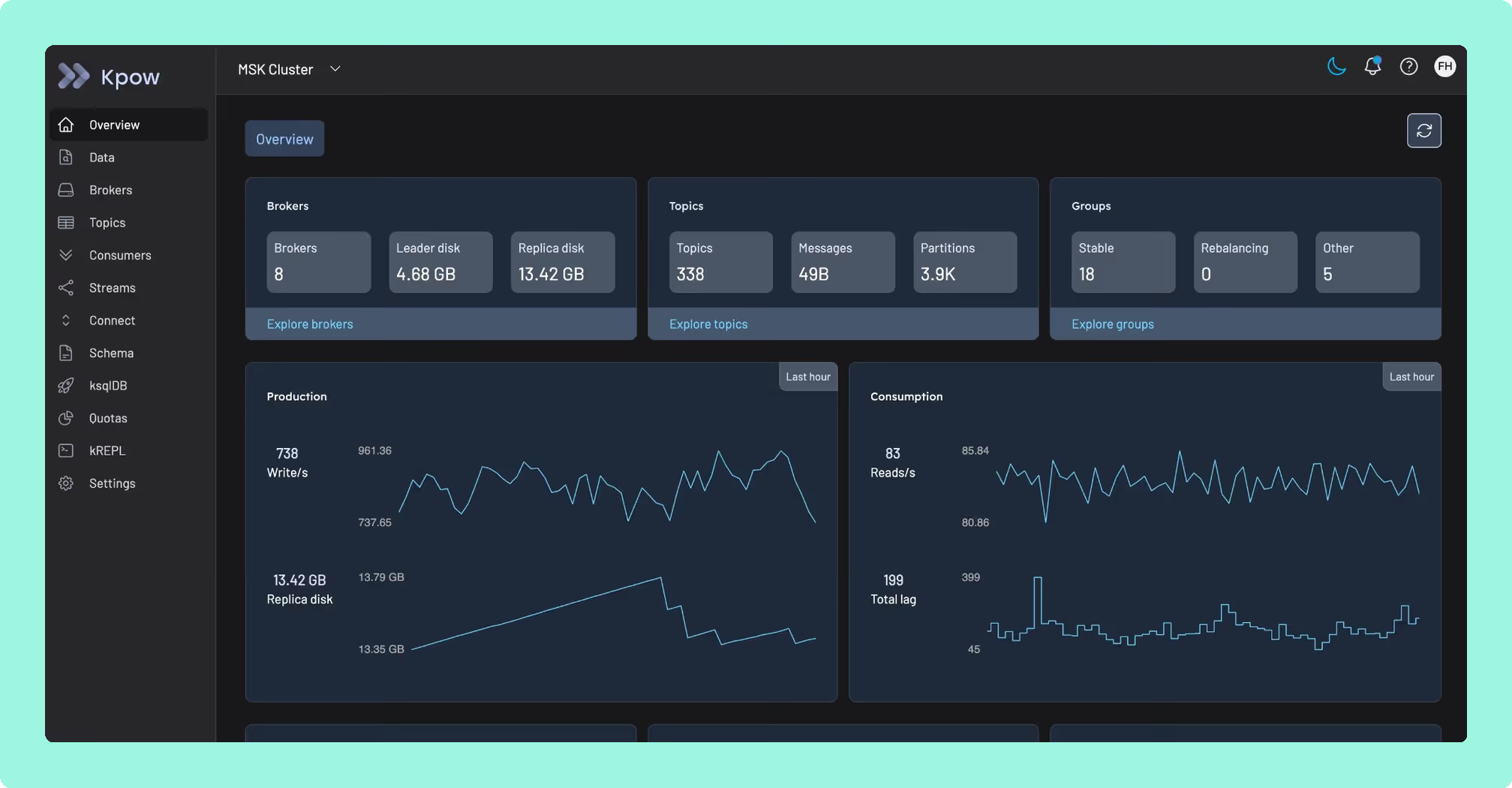
Control Center and Kadeck each tie the bill to something other than the cluster you are running. Control Center arrives bundled with a Confluent Platform enterprise licence, so what it actually costs is the price of a distribution, and it cannot watch Amazon MSK, Redpanda or Aiven at all. Kadeck’s Enterprise tier bills per user with a ten-user minimum, so a team of four pays 3,840 US dollars a year, the same price as a team of ten. Kpow by Factor House attaches the licence to the cluster instead, at a published price, so it belongs to no distribution and does not move when a fiftieth engineer opens it. It runs as one stateless JVM container against whatever Kafka you already have.
See a console bill that follows the cluster instead of the distribution or the seat count. Start with Kpow on the cluster you actually operate.
How these tools were scored
Every option is scored from 0 to 10 on each criterion, from the evidence and sources this page cites, and the reason for each score is on its card. Each criterion counts once, for a total out of 50. The options are listed by total.